
Before we talk about thinset…
We did a video where we react to some popular tile TikTok videos. It was fun and we saw some interesting stuff. As we expected, it was a mixed bag. With a ton of good info if you’re someone who’s looking for education, but also bad practices and subpar advice.
One of the clips we saw was this install with an AI voice over (does anyone like the AI voice?).
In the clip, the tile guy is installing a floor, and he is spreading thinset… and right away you can tell—it’s not ideal.
We notices he was pouring thinset, it was too wet, but then also the way he was troweling can cause problems down the line.
Tile might stick at first.
But long term? That’s where problems start.
Let’s see what the industry standards have to say about this!
The Goal Isn’t Just “Stick the Tile”
Thinset is not just glue, its job is to:
- Bond to the substrate
- Bond to the tile
- Fully support the tile underneath
If you miss that last part, you end up with hollow spots, cracks in your tile or loose tiles.
That’s why coverage is everything!
According to ANSI standards:
- 80% coverage minimum (dry areas)
- 95% coverage in wet areas
That’s the baseline.
Common Thinset Mistakes
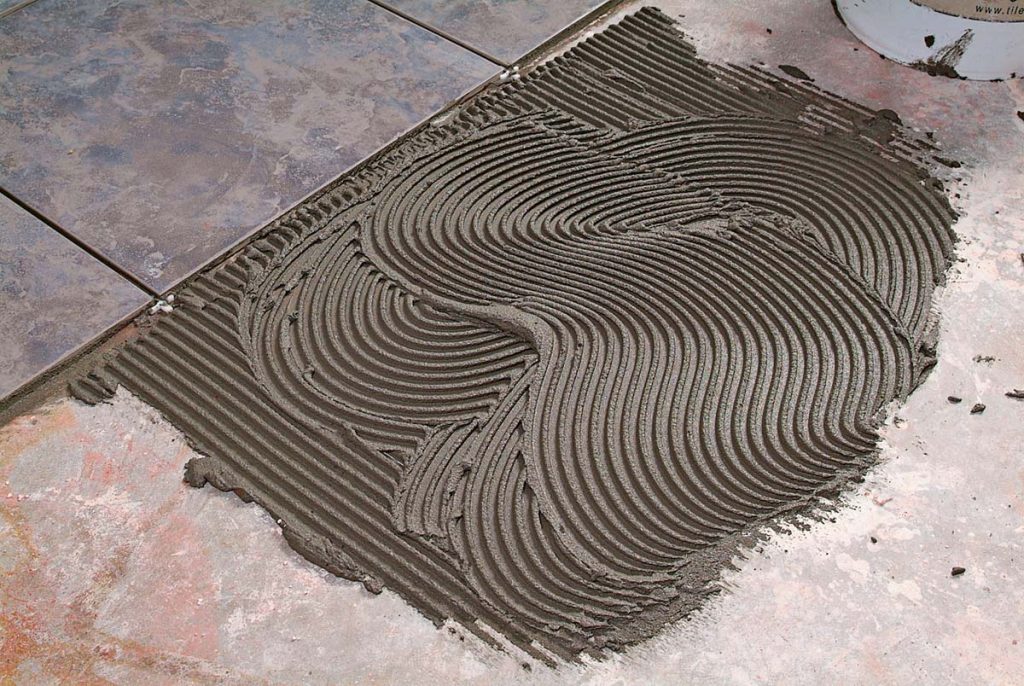
Swirling the thinset, random trowel patterns, not enough mortar, not collapsing ridges.
The biggest one?
No directional troweling.
When you spread thinset in circles or cross patterns, you trap air underneath the tile.
And that kills your coverage.
What the TCNA and the NTCA have to say about this.


Straight out of the playbook.
1. Key It In First
Use the flat side of your trowel to press thinset into the substrate.
This creates a strong bond right from the start.
2. Comb in One Direction (directional troweling)
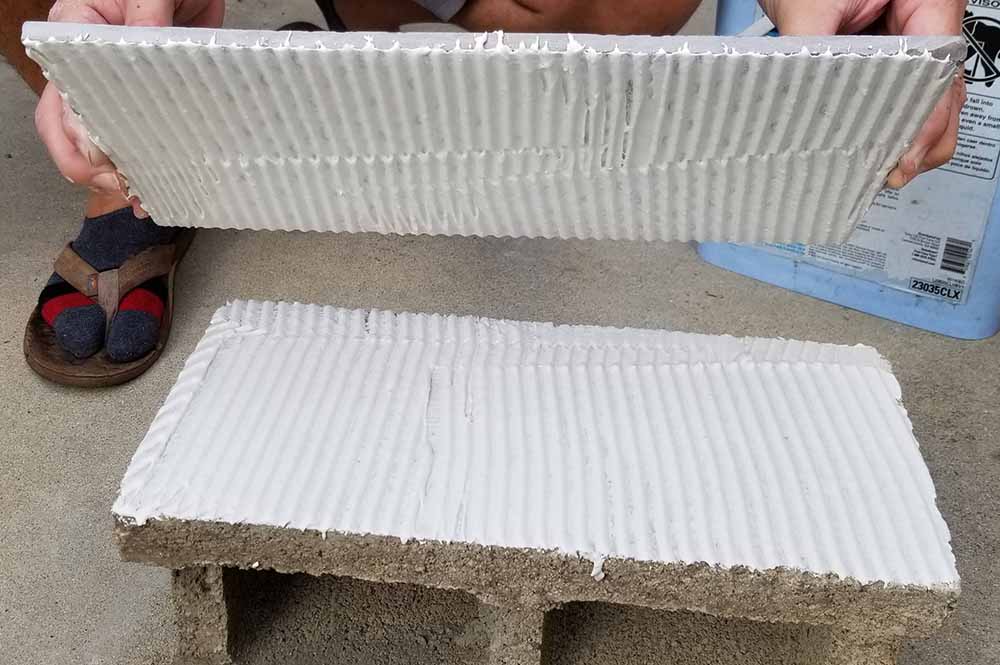
This is the big one.
Use the notched side of the trowel and run all your ridges in the same direction.
No swirls. No crosshatching.
Just straight, consistent lines.
This will help air escape, ridges collapse properly and achieve full coverage.
Directional troweling is specifically recommended because it produces the best mortar coverage under tile.
3. Use the Right Trowel (It Matters)
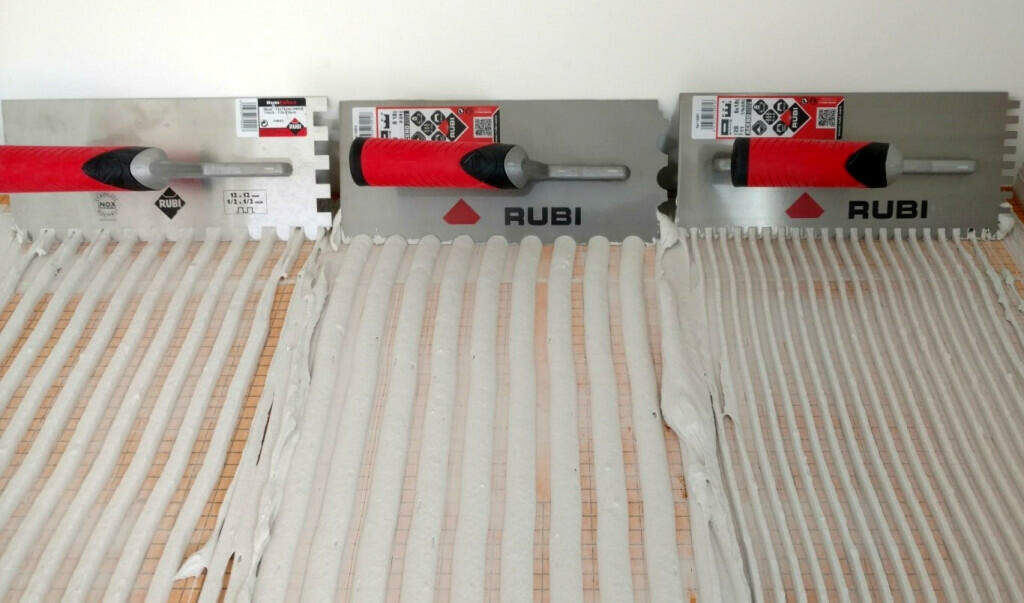
Not all trowels are created equal.
If your notch is too small:
- You won’t get enough coverage
Too big:
- Harder to collapse ridges
Trowel size depends on tile size—but the goal is always the same:
full contact under the tile.
4. Set the Tile and Move It
Don’t just drop the tile in place! You’ll need to:
- Press it in
- Slide it perpendicular to the ridges
This collapses the ridges and eliminates air pockets.
The NTCA specifically calls this out—movement is what embeds the tile properly.
5. Check Your Coverage
This is the part most people skip.
Set a tile… then pull it up and look.
If you see:
- Voids
- Dry spots
- Uncollapsed ridges
You’re not getting proper coverage.
Why This Matters Long-Term
This isn’t just about doing it “by the book.”
Bad thinset technique leads to loose tile, cracking, possible water intrusion in areas susceptible to it. All of this shortens the lifespan of your tile install. The worst part is that you usually don’t see it until it’s too late!
You usually don’t see it right away.
It shows up later.
In conclusion
Following the standards will serve you well when spreading thinset, as it will secure the integrity of you install.
Just remember:
Straight lines, proper coverage, and collapse your ridges.
That’s the difference between tile that lasts… and tile that fails.
Let us know what you think!
Have you ever pulled up a tile and checked coverage?
Or seen a job where the thinset clearly wasn’t done right?
Curious what you’ve come across.
Keep on learning.
If you’re interested in install tips, check out this blogpost we did about how to deal with patterned tile.
Or you can read one from our list: