
We are doing a fun series where we react to Tile Tik Toks. You can watch the latest episode here.
Let’s talk about thinset coverage.
When people think about tile installation, they usually focus on the visible stuff.
The tile.
The grout color.
The layout.
The niche everybody suddenly becomes emotionally attached to halfway through the project.
But thinset coverage is one of the most important parts of a tile installation is something homeowners will probably never see once the job is completed.
And honestly, that’s probably why it gets ignored more often than it should.
Good Tile Needs Good Support
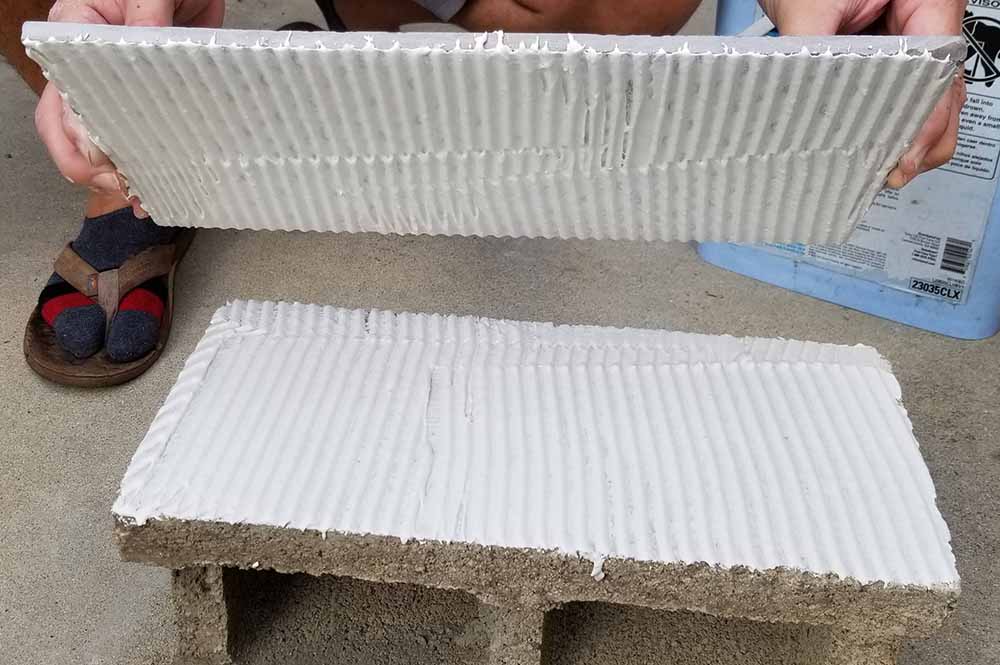
Tile is not designed to float magically above the floor or wall with random blobs of mortar underneath it.
It needs proper support.
That’s where thinset coverage comes in.
The goal is to create consistent contact between the tile and the substrate so the tile is fully supported across as much surface area as possible.
When coverage is poor, empty voids are left underneath the tile. And those voids can create all kinds of problems later:
cracking,
hollow sounds,
loose tile,
water retention,
edge breakage,
and weak spots that fail under pressure.
Sometimes a tile installation can look perfectly fine on day one while problems are already hiding underneath.
That’s the dangerous part.
“Good Enough” Coverage Usually Isn’t
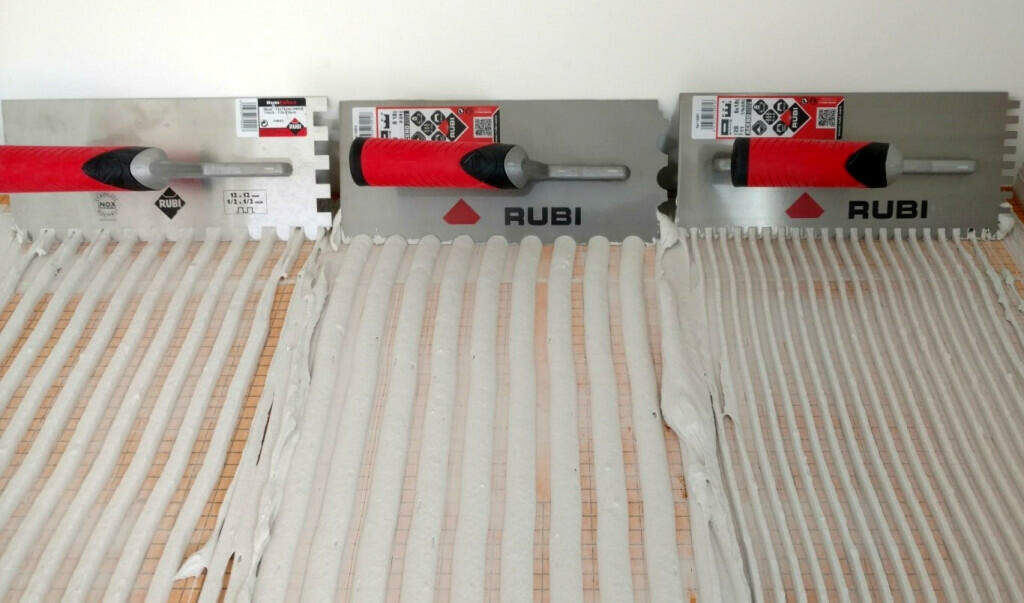
This is one of those areas where shortcuts catch up to people eventually.
You’ll sometimes see installers throw down a few random dabs of thinset, press the tile into place, and move on like they’re speedrunning the project.
And sure, maybe the tile sticks for now.
But tile installation isn’t supposed to be judged by how it looks next Tuesday.
It’s supposed to perform for years.
That’s why coverage standards exist in the first place. In wet areas especially, proper mortar coverage matters because water has a way of finding weaknesses over time.
A tile with poor support underneath it becomes vulnerable. Add foot traffic, movement, moisture, and time into the equation, and those weak points eventually start telling on themselves.
Usually at the worst possible moment.
The Drain Slope Conversation Connects to This Too
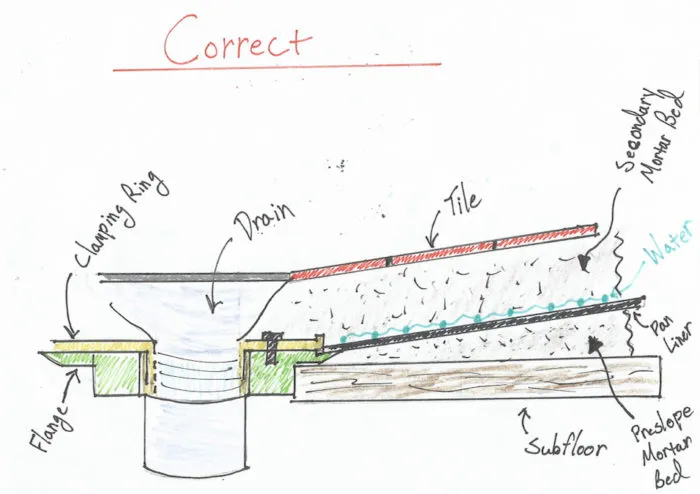
Check out our article about drain slope here!
The video also touched on drain slope, and the reason these topics connect is simple:
Both are about what’s happening underneath the tile.
Most people notice the finished surface.
Professionals worry about what’s below it.
A shower can have beautiful tile work and still perform poorly if the slope is incorrect or the coverage underneath the tile is inconsistent.
That’s why experienced installers obsess over prep, trowel technique, mortar consistency, directional troweling, and periodically pulling tiles to check coverage during installation.
Not because they enjoy making life harder for themselves.
But because these hidden details determine whether the installation actually lasts.
Large Tile Made Coverage Even More Important
Modern large-format tile has made thinset coverage more critical than ever.
Bigger tile means less forgiveness.
Any void underneath becomes a larger unsupported area. That’s why proper trowel selection, back buttering when necessary, and surface prep all matter so much on today’s installations.
The larger the tile gets, the more precision the installer needs.
And ironically, most homeowners will never realize how much effort went into making the floor feel solid and seamless when they walk across it.
That’s kind of the nature of good craftsmanship.
If the job is done correctly, nobody notices the hard part.
Final Thoughts
Thinset coverage is one of those things that’s easy to ignore because it’s hidden once the tile is installed.
But hidden doesn’t mean unimportant.
In fact, some of the most expensive tile failures start with things nobody could see after day one:
poor coverage,
bad prep,
incorrect slope,
or rushed installation techniques.
Beautiful tile matters.
But what’s underneath the tile is what determines whether that beauty actually lasts.