
In this video, when Rob is asked about the biggest mistake a tile installer can make on a floor, two things come to mind almost immediately:
Poor mortar coverage and excessive lippage.
Neither one is particularly flashy. They don’t get the same attention as tile color, grout choice, or pattern.
But both can determine whether a tile floor feels solid, looks professional, and holds up over time.
And sometimes you don’t even need to see the problem to know it’s there.
Biggest Mistake #1 What Does “Coverage” Mean?
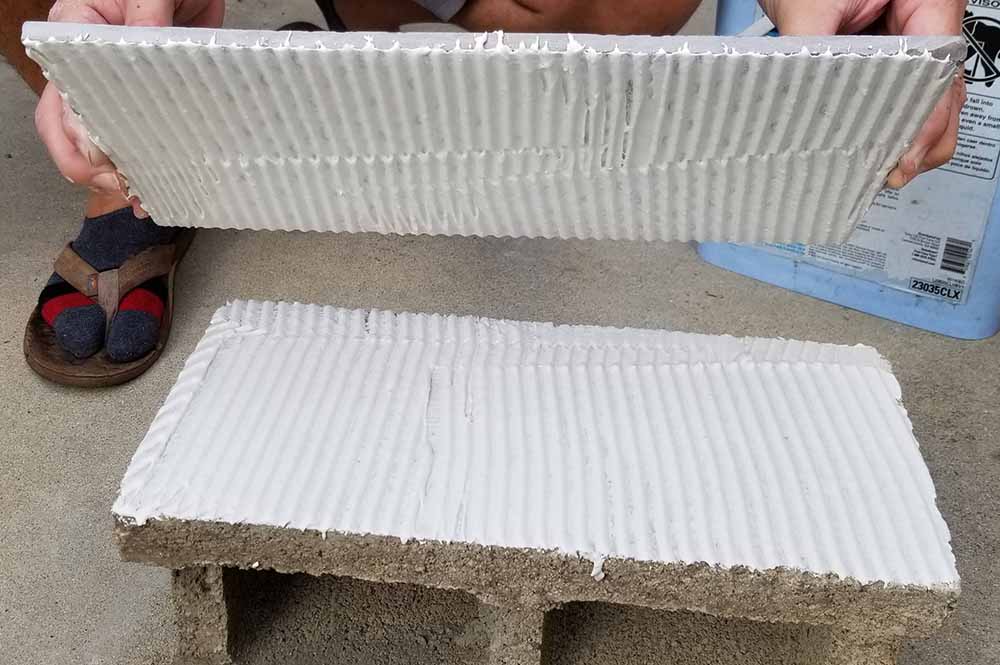
Mortar coverage is simply how well the thinset mortar makes contact between the back of the tile and the surface underneath it.
When a tile is installed properly, we want good, consistent support underneath it.
The problem comes when there are large empty areas or pockets beneath the tile.
Those hollow spots leave portions of the tile unsupported. Over time, that can contribute to loose tiles, cracked tile, or other failures—especially when we’re dealing with today’s larger-format porcelain.
You can have a floor that looks perfectly fine from above while the tiles underneath barely have enough mortar holding them in place.
That’s why installers occasionally lift a freshly placed tile during installation and check the back.
We aren’t just interested in whether the tile stuck.
We want to see how well it stuck.
More Thinset Doesn’t Automatically Mean Better Coverage
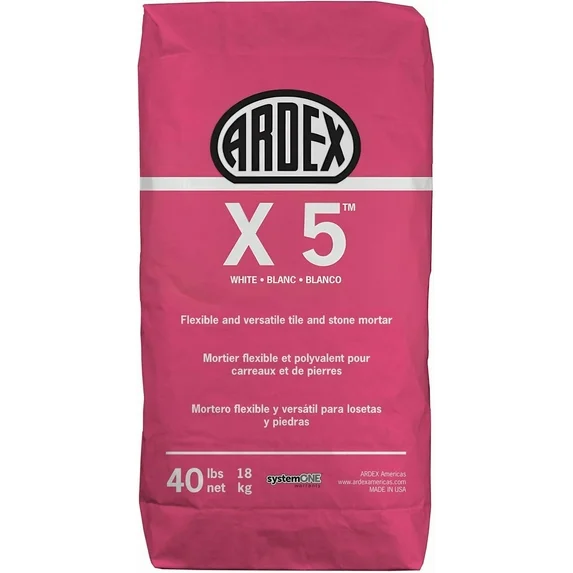
Good coverage is also about technique.
Simply putting a giant pile of mortar under the tile isn’t the answer.
The mortar needs to be properly applied so the ridges can collapse when the tile is set into place. The installer also needs to account for the condition of the floor and the size of the tile.
If the substrate isn’t properly prepared beforehand, trying to compensate with thinset can create a whole new set of problems.
Which brings us to the second big mistake.
Biggest Mistake #2 What Is Tile Lippage?
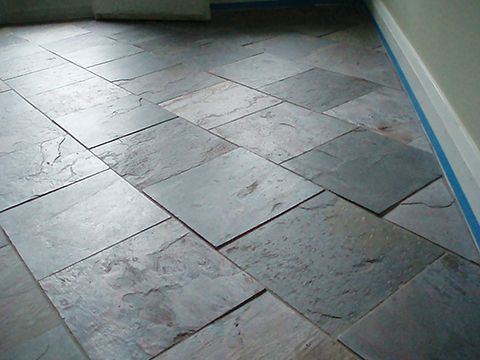
Lippage is the difference in height between the edges of two neighboring tiles.
Instead of transitioning smoothly from one tile to the next, one edge sits noticeably higher.
A small amount of variation can happen depending on the tile and installation. But excessive lippage is easy to notice.
You may see a shadow along the edge.
A chair may catch on it.
Your bare foot may feel it.
And in one project Rob remembers, the homeowner noticed it without ever seeing the floor at all.
The Homeowner Could Feel the Bad Installation
Rob tells the story of a blind homeowner who called Mann Tile after dismissing the crew that had originally been installing his floor.
At first, Rob wondered how the homeowner knew the installation wasn’t going well.
Then he arrived at the house.
The homeowner could feel the uneven tiles beneath his feet.
And once Rob saw the floor himself, there wasn’t much question.
It was bad.
That story is a pretty good reminder that a tile floor isn’t only something you look at.
It’s a surface you walk across every day.
If neighboring tiles are noticeably higher and lower, the problem doesn’t disappear just because the tile itself is expensive or beautiful.
Lippage Often Starts Before the Tile Is Installed
A flat-looking tile floor starts with a properly prepared substrate.
If the concrete or underlayment has dips, humps, or other significant irregularities, the installer needs to address those conditions before setting tile.
Large-format tile makes this especially important. The bigger the tile becomes, the harder it is for that rigid piece to follow an uneven floor.
Tile-leveling systems can help installers keep neighboring edges aligned while the mortar cures.
But they aren’t magic.
They cannot turn a badly prepared floor into a flat one.
Good preparation still comes first.
A Good Floor Needs Both
You can concentrate so much on keeping the tops of the tiles perfectly aligned that you neglect what’s underneath them.
Or you can get excellent mortar coverage while allowing the finished surface to become uneven.
Neither is enough by itself.
A quality tile installation needs both:
- Strong, consistent mortar coverage underneath
- A flat, comfortable finished surface above
Those are the details that help a floor perform the way it should.
The Parts You Don’t Notice Are Often the Most Important
When a tile floor is installed well, homeowners usually don’t walk into the room thinking about mortar coverage or lippage.
And that’s exactly the point.
The tiles feel solid. The transitions feel smooth. Nothing catches your foot. Nothing sounds suspiciously hollow. The floor simply looks and feels right.
We think you might enjoy this article.