
Drilling a clean hole through tile looks simple—right up until you actually have to do it.
Porcelain in particular can be extremely hard. If you attack it with the wrong bit, too much pressure, or too much heat, you can burn through an expensive drill bit, chip the tile, or turn a five-minute job into something much more frustrating.
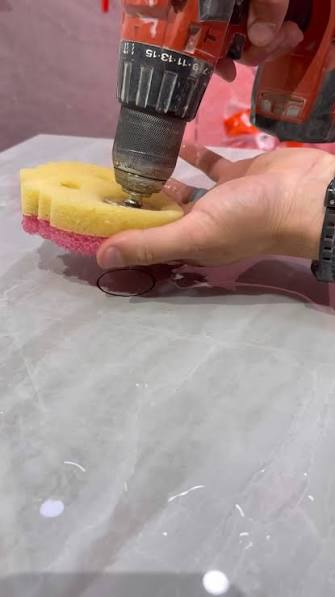
The video Rob is reacting to shows a simple trick: putting a small piece of wet sponge inside the core bit while drilling.
It’s a clever idea, and the reason it works comes down to two things: keeping the bit cool and keeping the dust under control.
Why Tile Drill Bits Need to Stay Cool
When we drill porcelain or other hard tile, friction creates heat very quickly.
That heat isn’t good for the cutting tool.
Diamond core bits work by grinding through the tile rather than cutting through it like a normal wood drill bit. If the bit gets too hot, it can wear prematurely and lose its ability to cut efficiently.
Keeping water around the bit helps control that heat.
That means the drill bit stays sharper longer and generally cuts more effectively.
If you’ve ever watched someone dry-drill a hard piece of porcelain until the bit starts smoking, you’ve seen the alternative.
That’s usually not a good sign.
The Sponge Trick Keeps Water Right Where You Need It

Normally, keeping a drill bit wet takes a little coordination.
You might have someone standing beside you with a wet sponge, feeding water into the area while you drill. On a horizontal surface, you may be able to create a small pool of water around the hole.
On a vertical shower wall, things get more interesting.
Gravity tends to have opinions.
That’s why the trick in this video is useful. A small piece of wet sponge placed inside the core bit carries moisture directly to the cutting area.
As the bit turns, the sponge helps keep water near the surface instead of having it immediately run down the wall.
Simple idea. Useful result.
Water Also Helps Control Dust

The second benefit is dust control.
Grinding through porcelain, ceramic, or stone can produce very fine dust. When you drill dry, that material can become airborne quickly.
Keeping the cutting area wet helps capture much of that dust before it gets into the air.
That’s better for the installer, better for the homeowner, and better for the room you’re working in.
It’s the same general principle we use throughout remodeling: control the mess at the source whenever possible.
You’ll still need to clean up afterward, but there’s a big difference between wiping up some wet residue and letting fine tile dust float around the bathroom.
There Are Other Ways to Do It
The sponge-inside-the-bit trick isn’t the only option.
As Rob mentions in the video, installers have used several versions of the same idea for years.
You can cut into a sponge and position it around the drilling area. You can have a helper hold a wet sponge directly against the bit. There are also commercially available drilling guides and water-delivery systems designed to keep the bit cool.
The exact method matters less than the principle:
Keep the bit cool and keep the dust controlled.
If a simple piece of sponge accomplishes both, we’re all for it.
Good Drilling Technique Still Matters
Water doesn’t fix bad technique.
The correct bit still needs to be used for the material, and the drill needs to be controlled carefully.
This becomes especially important when drilling finished tile for things like shower fixtures, plumbing penetrations, accessories, or glass enclosures.
One wrong move can chip a tile that may already be surrounded by finished work.
And once a shower is waterproofed, any penetration through that assembly also needs to be handled correctly. Drilling a perfect hole through the tile doesn’t help much if water is later allowed to travel through that opening into the wall.
The small details matter.
Sometimes the Best Tricks Are the Simple Ones
Not every useful tile tip requires an expensive specialty tool.
Sometimes it’s a wet sponge.
This trick works because it solves two real problems at the same time: excessive heat and airborne dust. It helps extend the life of the drill bit, keeps the cutting process cleaner, and makes drilling hard tile a little easier to manage.
That’s the kind of jobsite trick we like—simple, inexpensive, and based on something that actually makes sense.
If you’re doing a demo and need to learn more about dust control, check out this article!