
Before demolition starts, homeowners sometimes ask us a question that sounds simple:
“How hard is this bathroom going to be to tear out?”
Sometimes we can look at a bathroom and have a pretty good idea.
Other times, the real answer is: we’ll know more once we open it up.
In this video, our installers Tom and Jason look at the existing bathroom and immediately call it a “nice buttery demo.” That’s contractor language for: this one should come apart without putting up too much of a fight.
A few details give Tom confidence—the tile is installed over drywall, the wall tile is ceramic, the bathtub is steel, and the bathroom doesn’t appear to have seen the kind of heavy use that would make us expect significant moisture damage behind everything.
Compared with some bathrooms we encounter, that can make demolition much more straightforward.
What Makes This Bathroom Easier to Demo?
One of the biggest factors is how the existing shower or tub surround was originally constructed.
Here, the wall tile is installed over drywall. When we start removing it, there’s a good chance sections of the tile and drywall can come off together rather than requiring us to chip every individual piece away from a heavy substrate.
That can save a lot of time.
The existing wall tile is also ceramic, which generally doesn’t add the kind of weight we sometimes deal with in heavier assemblies.
Then there’s the bathtub.
It’s a steel tub rather than something like a very heavy cast-iron tub. That matters when you eventually have to get the old thing out of the bathroom and through the house.
A bathtub becomes considerably less charming once you’re carrying it.
Some Showers Fight Back
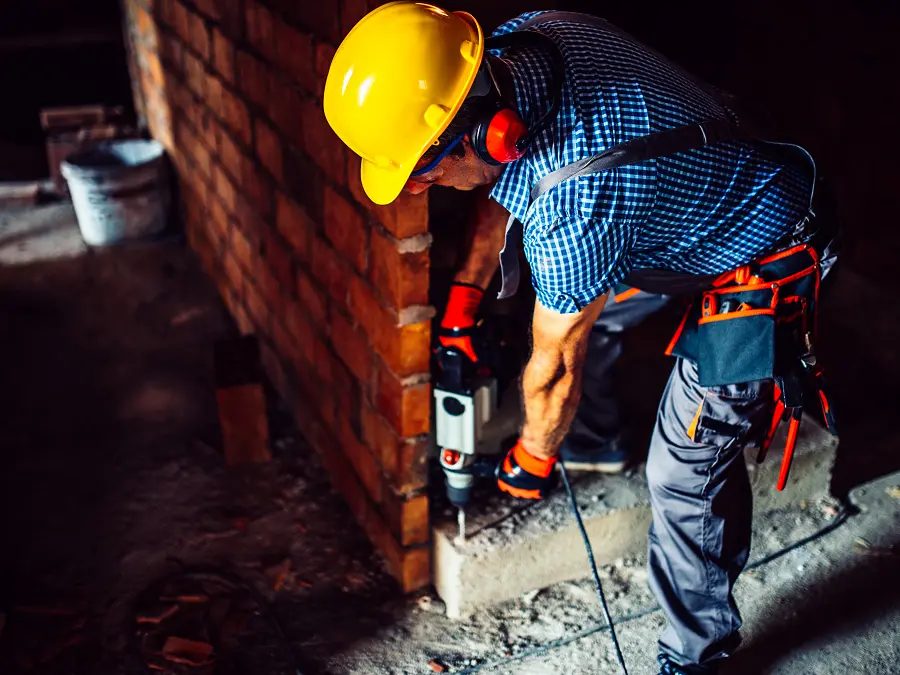
Not every demolition goes this smoothly.
We open certain bathrooms and discover layers of construction that were apparently installed with the expectation that nobody would ever remove them again.
Heavy mortar beds, dense backer materials, extremely well-bonded tile, difficult framing conditions, and previous remodels built on top of older remodels can all slow down demolition.
Then there are the things we simply can’t see until the walls come apart.
Water damage is a big one.
If moisture has been getting behind the tile for years, framing or other materials may need attention before we can even think about putting the new shower back together.
That’s why demolition estimates involve experience—but also a little humility.
We can inspect what’s visible and make an educated assessment. We can’t see through the walls.
Dry Behind the Tile Is Good News
Rob also notes that this particular bathroom doesn’t appear to have had a tremendous amount of use.
That makes us hopeful that once those sections come down, things will be relatively dry behind them.
That’s always good news.
Demo is much simpler when we remove the old materials and find solid framing waiting for us.
If we discover damaged wood, deteriorated materials, or evidence of long-term moisture exposure instead, the project changes. Those problems need to be corrected before the new installation covers everything back up.
We’d rather find the issue during demolition than build a beautiful new shower over a bad structure.
The Rebuild Can Be More Complicated Than the Demo
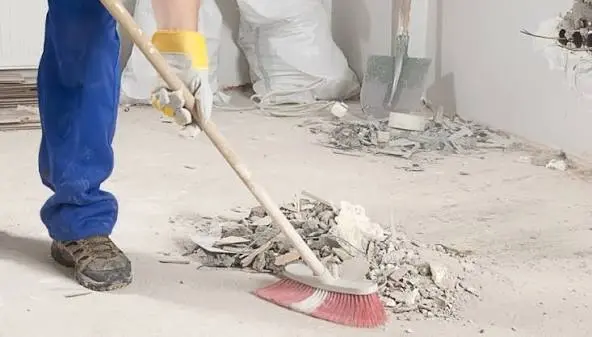
Something else Rob mentions in the video is that tearing this bathroom apart may actually be the easy part.
Putting it back together is where more thought comes in.
Modern custom showers can involve niches, benches, zero-entry transitions, large-format tile, complicated layouts, plumbing changes, and waterproofing details that all have to work together.
At MannTile, we prefer Schluter waterproofing systems when rebuilding showers. Once the old materials are removed and the framing is exposed, we can correct the surfaces, prepare the shower properly, and create a bonded waterproofing system directly behind the new tile.
Taking the old bathroom apart may require muscle.
Building the new one correctly requires a lot more planning.
Demo Is Always a Little Unpredictable
That’s probably the biggest takeaway for homeowners.
Some bathrooms come apart beautifully.
Others make us earn every square foot.
The age of the bathroom, original construction method, materials used, amount of moisture exposure, and any previous repairs can all affect how difficult demolition becomes.
This one looks promising.
As Rob puts it, it should be a “nice buttery one.”
We’re always happy when that prediction turns out to be right.
For homeowners in Englewood, Venice, North Port, and throughout Southwest Florida, we approach demolition with realistic expectations: inspect what we can, protect the home, take the old installation apart carefully, and be prepared to address whatever we find underneath.
Because the new bathroom can only be as good as what we uncover—and correct—before we build it back.