
In this video, Rob reacts to three instagram videos. We saw a couple of bad jobs and one that’s difficult to get right.
Commenting on other people’s shortcomings isn’t cool. Especially when you’re not aware of the difficulties they may have faced. People make mistakes, and they grow from them. None of us are perfect, that’s true. But sometimes someone’s work is so glaringly bad it becomes harmful. Sometimes, it can even put their lives at risk. Then you have to comment. This serves a twofold purpose: it warns people against unscrupulous individuals and harmful practices, and serves as a teaching moment for those who would, unknowingly, engage in those for lack of experience.
In today’s article we’ll discuss a couple bad practices that, while seemingly innocuous, could very well surprise you with a fright you won’t forget.
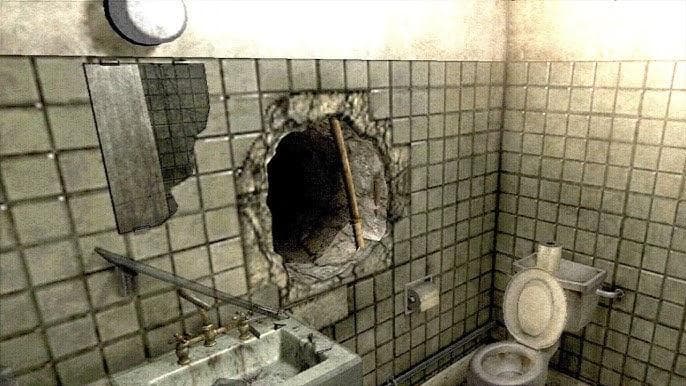
Built Like a House of Cards
I kind of remember sitting in the theater when Michael Bay’s Transformers came out (well, it had already come out, which is why I was sitting there). I remember I couldn’t help but think how inconvenient (and scary!) it would be for your car to turn into a living, sentient being. Picture yourself eating a burger when your car decides to spontaneously shuffle your seat, steering wheel, doors, everything around. At the very least, you’d probably drop your burger (and that’s not cool). Now imagine a more frightening scenario: you’re taking a shower, whistling your favorite tune, thinking about burgers. Then the entire wall comes down on you, hungry for your toes. That’ll leave a lasting impression. And a mark.
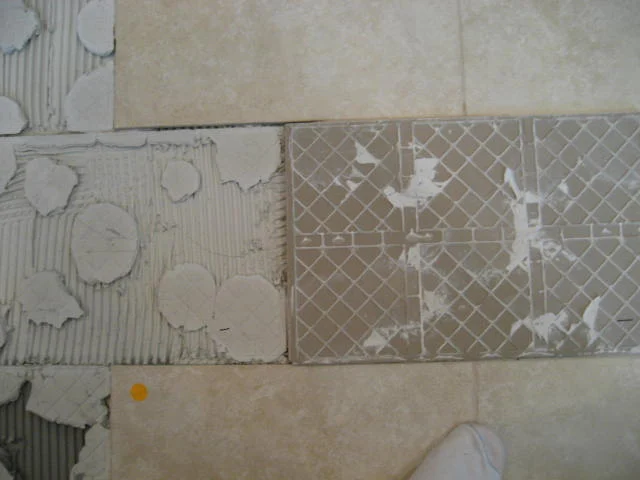
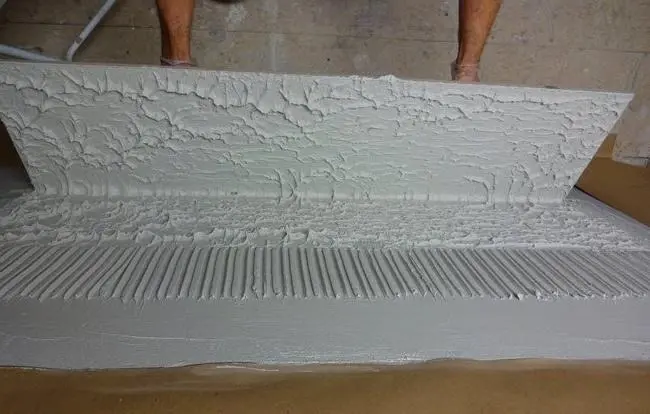
No, your shower’s not a Decepticon. It turns out someone decided to cut corners and treat tile installation like an 8th grader’s first photo album. And spot-bonding may be the cause. Now, spot-bonding sounds like when you take a date for a burger at a popular food truck with a nice vista. But that’s not the case. Spot-bonding, or five-dot (as some tile guys call it), is when you plop a little dot of thinset in the center and four at the corners on the back of the tile. This is not adequate. Thinset has to cover most of your tile, especially if we’re talking about humid environments. According to ANSI standards, you want the thinset to cover 95% of your tile in humid conditions (80% in other cases). And you should not apply it like jelly on a peanut butter sandwich. Besides covering most of the tile, you have to trowel it correctly and set the tile carefully to avoid creating pockets of air and places where the water can get into. Doing this wrong (e.g. spotbonding) can contribute to tile breakage, or make it easier for the tile to fall from the wall (onto your toes).
More than Meets the Eye
Grout doesn’t get much attention. Even though its role is mostly aesthetic (covering joints and improving the appearance of the tile), bad grouting can exacerbate existing issues. Yes, sometimes the job is as easy as re-grouting your shower. But loose or cracked grout isn’t always due to bad installation. Especially if it happens after some time has passed. It can point to a different, more serious issue. Both tile and grout are rigid, and thus prone to breaking with pressure and tension. Since grout’s in ridges and around corners, it’s the first thing that cracks when a structure shifts and moves.
And this is why a botched job is so bad. It can easily hide the real issues. Either you think it’s not an issue and stop paying attention to other signs, or you go paranoid thinking the tile is plotting to take your toes at the drop of a hat (or a bar of soap).
Nothingburger Whopper
And this is the meat of the issue: if the person in charge of that bad job was in charge of the whole installation, then that spot-bonded tile and that loose grout can be more than cosmetic issues. If that is the case, you could be in a whopper of a pickle. We’re talking about improper waterproofing (and vapor protection), the reason why 75% of showers fail.
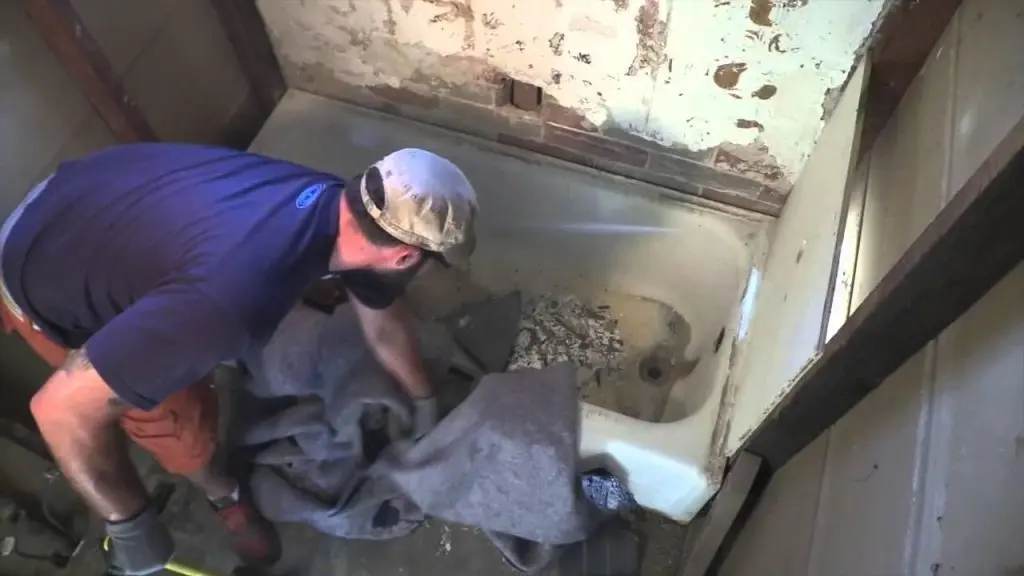
As we’ve mentioned before, tile and grout are not waterproof. They’re porous and allow the water to move through. Without a vapor managing system, moisture accumulates behind the tile and affects the surrounding structure, which can make it shift and break apart. Think of a good hamburger or a sandwich. In order to keep the sauce and meat juices from soaking the bread, you add an insulating layer of lettuce or some other green leafy vegetable. This helps to keep the bread dry. Without it, the bread loses its integrity and the burger falls apart and onto your shirt. “Wood is not like a hamburger”, you say (go ahead, don’t be shy). You know who disagrees (besides me and my homies)? Termites. Once they catch wind of your waterproofing issues, they’ll come for your shower structure. And your toes. (In this wacky timeline you have wooden toes because the tile kept falling on them. That or you’re a cool pirate. Take your pick)
(Damage water video here: )
That’s why we insist you should waterproof your shower. And there are lots of good alternatives. We work with and recommend Schluter waterproofing systems. Traditional waterproofing systems are behind the backerboard, while Schluter systems sit directly behind the tile and deal with the moisture immediately, without letting it go through other layers, removing other potential failure points. This means that it’s easier to see any potential issues you may have without having to remove an extra layer.
You Don’t Need to Panic
Now, this doesn’t mean you need to rush to your shower and hack it up with a pickaxe to make sure everything is up to code at the most minute imperfection. Not every imperfection is an omen of impending catastrophic shower failure. Cracked or loose tile doesn’t always mean you’ll have to spend thousands to make sure you’ll remain toeful. Sometimes it is just as simple as re-grouting your shower.
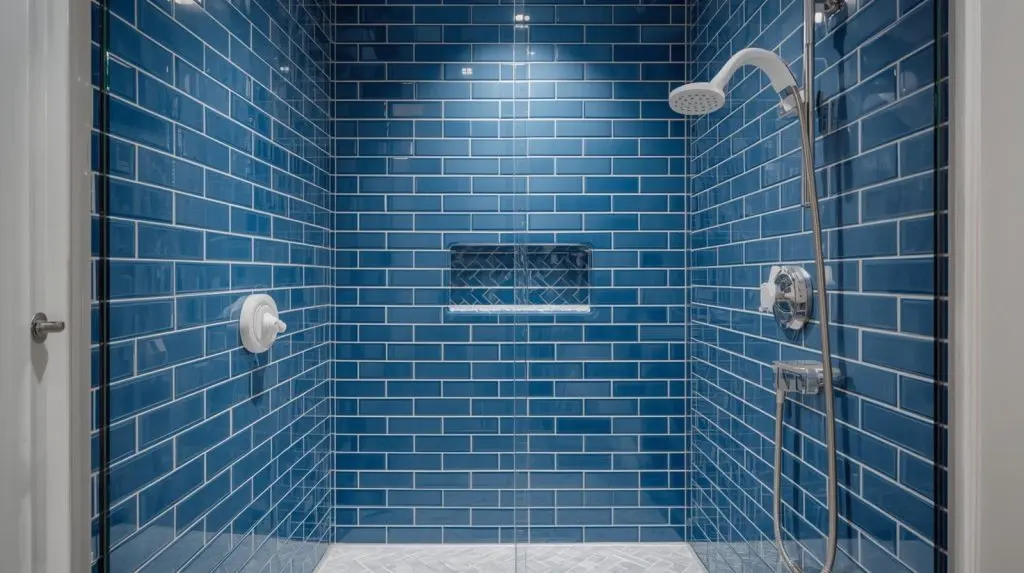
This is merely a reminder that choosing someone qualified means more than quick set up and a smooth finish. It will give you peace of mind, to eat your burgers in peace, and sing your tunes heartily in the shower.
For homeowners and contractors in Englewood, North Port, Port Charlotte, and throughout SWFL, we can do or re-do your shower, and all types of tile work on showers, kitchens and floors. If you’re interested in installing or DIYing your shower, we also have shower kits with everything you need for a shower down to the waterproofing material. You can swing by our showroom for tile, or make an appointment to work on your project and bring your ideas, questions and such. You can check our other entries dealing with installation, like this one: