
Watch our installer Josiah explain a few good practices on how to mix grout.
Mixing grout seems simple on the surface—pour powder, add water, mix it up, and pack it in. But in reality, most grout failures don’t come from bad tile… they come from bad mixing.
From inconsistent color to weak joints and premature cracking, a lot of common issues trace back to how the grout was handled before it ever hit the wall or floor.
We touch on 3 important considerations you should keep in mind when mixing grout. Keep on reading and find out if you’re doing these things already.
1. Using a Low-Speed Drill – Speed Matters for mixing grout
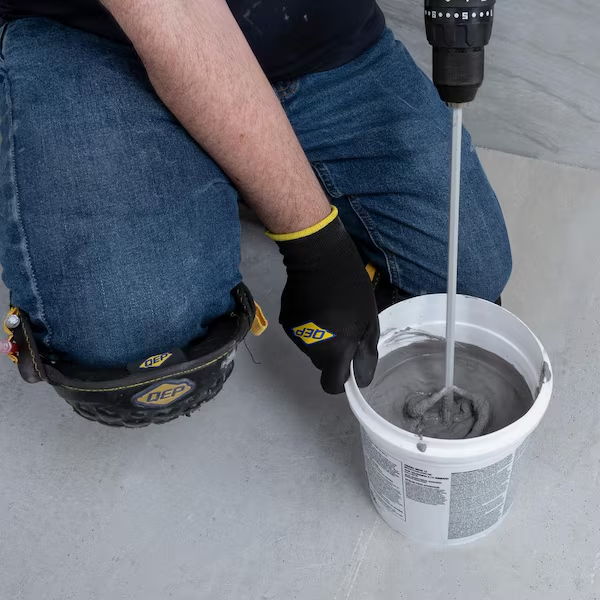
If there’s one habit that separates a clean, durable grout job from a problematic one, it’s mixing speed.
A low-speed drill (typically under 300–450 RPM) is recommended for a reason—it protects the material when mixing grout.
When you mix grout too fast, you’re essentially whipping air into it. That causes tiny air pockets that weaken the final joint, pinholes on the surface after curing, inconsistent texture and color, etc.
Grout isn’t paint—it doesn’t need to be aerated. It needs to be evenly hydrated and kept stable.
A slow, controlled mix gives you a smoother, denser, more predictable material that packs better and cures stronger.
2. How Much Water Is Too Much Water when mixing grout?

This is where most grout problems actually begin.
Every manufacturer gives a water ratio for a reason, and going beyond it—even slightly—can change how the grout behaves permanently.
So what does “too much water” look like in the real world? The grout becomes loose, almost pourable, it’ll fall apart on the trowel. The pigment will start looking faded or uneven, and it will spread easily but feel kinda weak or sandy.
And the problems don’t stop there. Over-watering often leads to cracks due to shrinkage, powdery or soft grout lines, color blotching and haze and reduced durability in wet areas like showers.
A simple field rule:
If it looks more like pancake batter than modeling clay, it’s too wet.
Even a small amount of extra water can compromise performance, especially in high-moisture environments.
3. What Is Premium Grout—and Is It Worth Using?


“Premium grout” usually refers to higher-performance formulations designed to improve strength, consistency, and stain resistance compared to basic cement-based options.
These grouts typically include: Higher polymer content for flexibility and bonding, finer, more consistent aggregates for smoother joints, better stain and water resistance and they also provide more stable color consistency.
Some premium systems also include rapid-setting or hybrid technologies that perform better in demanding environments.
When it makes sense to use premium grout:
generally speaking, when you are installing tile in showers and wet areas, or with natural stone installations.
You could also consider using high performance grout in high-traffic floors or projects where the color consistency matters a lot. It can also be a consideration when
When standard grout may still be fine:
In low-traffic decorative areas, tight budget projects, simple wall tile installations with low exposure.
The tradeoff is straightforward: premium grout costs more upfront, but it reduces issues down the line—fewer callbacks, fewer stains, and better long-term performance.
Final Thoughts
If you get the mixing right—slow speed, correct water ratio, and a quality product—you eliminate a huge percentage of common grout failures before they even have a chance to happen.
Hope this is helpful, thank you for reading!
Are you interested in this topic?
Then you might like this article.
And follow us on social media! we’d love to hear your thoughts.