
In this video, we address one of the biggest concerns homeowners have before a remodel starts:
How much of my house am I going to lose while you’re working?
That question gets especially important when the construction area is right next to the kitchen.
In this project, demolition is happening beside an existing kitchen and pantry that the homeowners still need to use. Rather than treating the entire area like one big construction zone, the crew built a temporary containment wall between the work area and the kitchen.
The goal is to control dust, separate the homeowners from the demolition, and keep their kitchen usable for as much of the project as possible.
That kind of planning can make a big difference in what it feels like to live through a remodel.
Containment Creates a Construction Zone Inside the Home
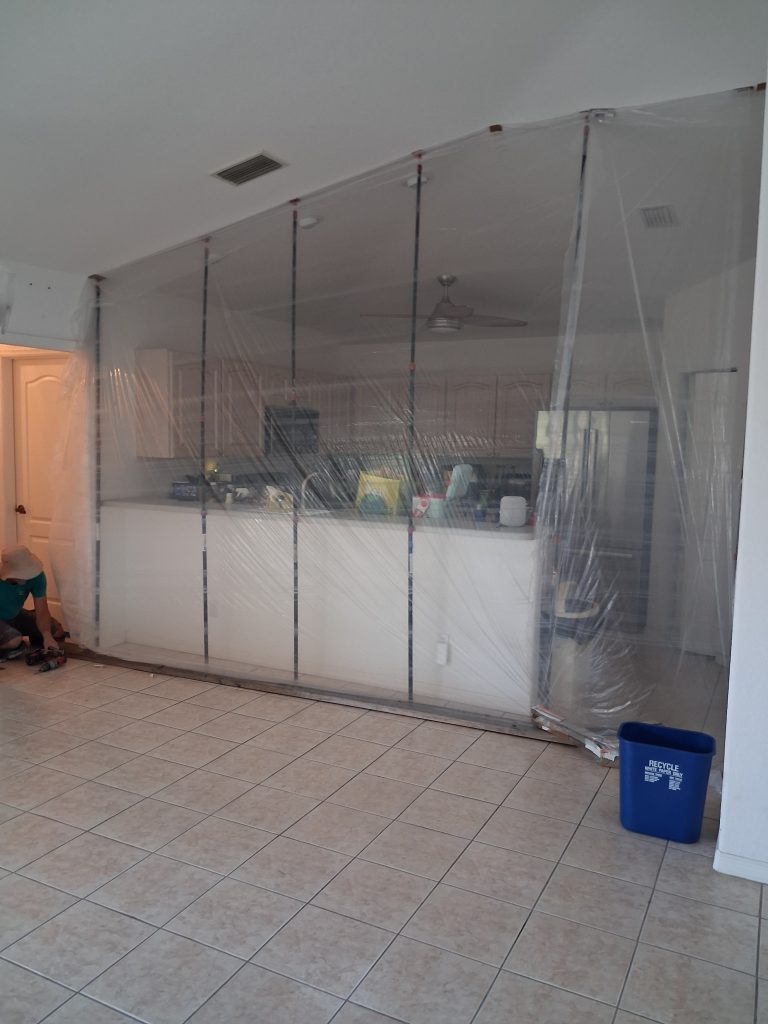
Before demolition starts, we want a clear line between our work area and your living area.
In this case, a temporary wall made with poles and heavy plastic creates that separation.
On one side, the crew can demolish flooring, move debris, and perform the messy work.
On the other side, the kitchen stays protected.
It isn’t a permanent wall. Once the heavy demolition and cleanup are complete, the containment can come down and the homeowners regain access to the whole space.
For this particular project, the plan allows the homeowners to lose access to the kitchen and pantry for only a limited portion of the work instead of having them shut down unnecessarily for the entire remodel.
The Plastic Isn’t Just Hanging There

One detail Rob points out in the video is that the containment plastic is actually being pulled toward the work area.
That tells us the dust-control setup is creating negative air pressure inside the construction zone.
In simple terms, air wants to move into the work area rather than push out of it.
That’s exactly what we want.
If we’re creating dust during demolition, we don’t want the air carrying it toward the kitchen, living room, or rest of the house. We want airflow moving toward the controlled work area, where dust can be captured and filtered.
You can even see the plastic react when an opening is used and then closed again. Once the barrier is sealed, it pulls back toward the construction side.
That’s a good visual sign that the containment is doing its job.
Homeowners Still Need a Way In and Out
Containment only works if it also works with real life.
The crew still needs access.
The homeowners may still need access.
Materials have to move through, and debris eventually has to come out.
That’s why these temporary barriers can include controlled openings that allow people to pass through without taking the entire wall down.
The important part is closing that opening again when you’re finished.
If the containment is constantly left open, you’ve basically installed a very expensive piece of plastic decoration.
Good dust control depends on the crew actually maintaining the separation throughout the job.
Why Protect the Kitchen So Carefully?
Kitchen surfaces are particularly good at collecting dust.
Cabinet tops, counters, appliances, shelves, dishes, and all the little spaces around them give fine construction dust plenty of places to settle.
And demolition dust has an impressive ability to travel.
That’s why simply saying, “We’re working over there, so the kitchen should be fine,” isn’t enough.
If we’re doing major demolition nearby, we’d rather create a physical barrier and manage the airflow than hope the dust stays where we want it.
Hope isn’t really a dust-control system.
Planning the Sequence Helps Too
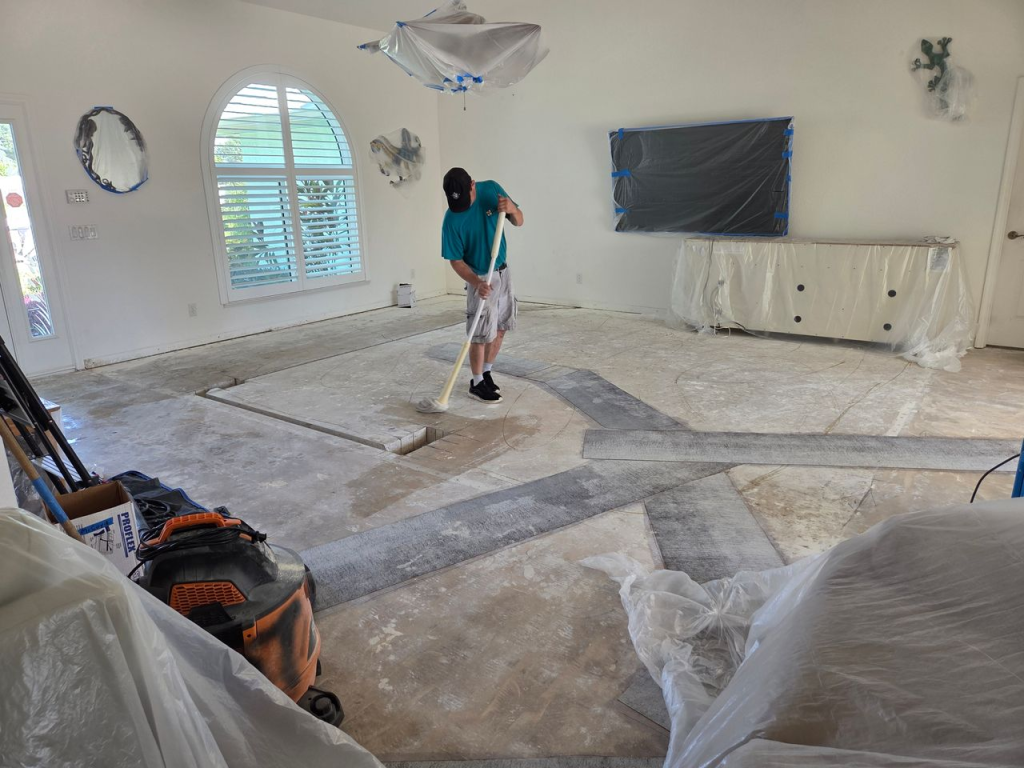
The temporary wall isn’t the only smart part of this setup.
The crew is also thinking about when different parts of the project happen.
If the heavy demolition can be completed, cleaned up, and contained within a concentrated period, there’s no reason to keep the homeowner separated from the kitchen longer than necessary.
That means planning the demolition sequence before starting.
Protect the kitchen.
Perform the messy work.
Remove the debris.
Clean the area.
Then take down the containment when it’s appropriate.
A remodel is always going to cause some disruption, but good planning can keep that disruption from spreading into parts of the home that aren’t actually being remodeled.
Remodeling in an Occupied Home Requires a Different Mindset
Most of the projects we work on aren’t empty buildings.
They’re homes.
People still need to cook dinner, sit in the living room, take care of pets, and live their normal lives while we’re working.
That’s why surface protection, containment, dust control, and access planning aren’t extras.
They’re part of the job.
For homeowners in Englewood, Venice, North Port, and throughout Southwest Florida, MannTile tries to think beyond the area we’re tearing apart. A successful remodel isn’t only about how the new tile looks when we’re finished.
It’s also about how well we protect the home you’re still living in while we get there.
Read our previous entry on demo here.