
Demolition day is when a remodel starts to feel real. (Watch the video)
The tools come out. The old tile starts coming down. Materials are moving through the house. And even with good surface protection and dust control, the home is temporarily becoming a construction site.
That doesn’t mean you need to dread it. But there are a couple of things homeowners can do ahead of time that make the process much easier.
Based on what we see on our projects, we’d keep two things in mind before demo starts:
Have somewhere else you can go if you need a break, and think ahead about where your furniture and belongings are going to live during the project.
Tip #1: Have a Backup Plan for Getting Out of the House

Different people have very different tolerances for remodeling.
Some homeowners can sit in the next room answering emails while we’re running demolition equipment.
Others hear the first few minutes of hammering and decide they would rather spend the afternoon literally anywhere else.
Neither reaction is wrong.
Demo can mean noise, vibration, dust, workers moving in and out, and doors occasionally opening while debris is carried outside. Depending on the work and time of year, keeping the house perfectly comfortable throughout every stage isn’t always realistic either.
So even if you plan to stay home during the remodel, we recommend having an alternative.
Maybe that means spending the day with family, working from another location, running errands, or simply having somewhere quiet you can retreat to if the project gets to be too much.
You may never need to use that backup plan.
But it’s much better to have one and not need it than to realize halfway through the first day that you and a demolition hammer are not compatible roommates.
Ask Your Contractor What the Loud Days Will Be

Not every day of a remodel feels like demolition day.
There may be days when the crew is waterproofing, laying out tile, grouting, or doing detail work that is considerably less disruptive.
Before the project begins, ask which portions of the job are likely to be the loudest or messiest.
That can help you decide when you’d rather be out of the house without feeling like you have to move out for the entire remodel.
Communication makes a big difference here.
Tip #2: Make a Plan for Furniture and Belongings

The second thing to think about is everything sitting between the work area and the outside door.
We protect the surfaces we’re working around, but the clearer the path to the project, the better.
If you have a lot of furniture near the work area—or especially large, heavy pieces—it may be worth temporarily relocating some of it.
For larger projects, that might even mean using a storage container or another secure storage option for a short period of time.
Does every bathroom remodel require a storage container?
Absolutely not.
But if the crew has to repeatedly move heavy furniture back and forth just to get materials and debris through the home, the chances of something getting bumped, scratched, or damaged naturally increase.
We try not to damage anything, obviously. But the safest antique cabinet is usually the one that isn’t sitting three feet from an active demolition path.
Don’t Forget the Small Stuff
Homeowners naturally think about large furniture, but smaller belongings can create just as much hassle.
Before demo, look around the work area and the pathway leading to it.
Remove things like decorations, lamps, framed photographs, small tables, loose rugs, toiletries, and anything fragile that doesn’t need to be there.
If we’re remodeling your bathroom, emptying the vanity and nearby storage ahead of time can also save everyone time once the project begins.
The less clutter surrounding the work area, the easier it is for the crew to protect the home and move safely.
Your Home Doesn’t Have to Become a Construction Zone Everywhere
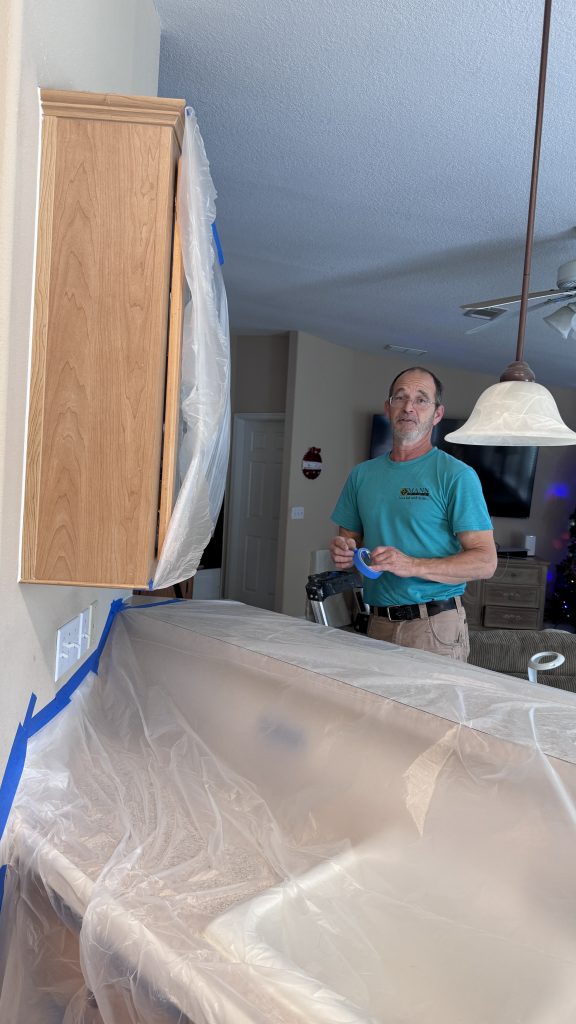
A good contractor should still take responsibility for containment, floor protection, dust control, and protecting surfaces that are staying.
We’re not suggesting that homeowners should empty the entire house before we arrive.
The point is simply to make the construction area easier to separate from the rest of your life.
Your contractor handles the work zone.
You can help by removing unnecessary belongings and making a plan for yourself during the most disruptive parts of the project.
A Little Planning Makes Demo Day Easier
Before demolition starts, ask yourself two questions:
Where will I go if the noise or activity becomes too much?
And:
Is there anything near the project that would be safer somewhere else for a while?
Those two decisions can make the first phase of a remodel much less stressful.
Thank you for reading! Check out another article on demo right here.