
You can watch our video on patterns or keep reading!
If you’ve been looking at backsplash ideas, you’ve probably noticed the same patterns showing up over and over.
That’s not random.
These are the most Googled backsplash tile patterns—the ones homeowners keep coming back to because they work.
But just because a pattern is popular doesn’t mean it’s right for your kitchen.
Let’s break down the top patterns—and when you should (and shouldn’t) use them.
1. Subway Tile (The Standard That Still Works)

Subway tile is the most searched backsplash pattern—and for good reason.
It’s simple, flexible, and fits almost any kitchen style.
Most common layout:
- Classic brick (offset)
Why people choose it:
- Timeless look
- Easy to install
- Works with almost any cabinet or countertop
Where people go wrong:
- Defaulting to it without thinking about layout or grout
Pro insight:
Subway tile isn’t boring—bad decisions around it are. Layout, grout color, and orientation are what make it stand out.
2. Herringbone (High-End, If Done Right)

Herringbone is one of the fastest-growing backsplash searches—and it instantly elevates a space.
Why it works:
- Adds movement and texture
- Feels custom and high-end
- Breaks up simple kitchens
Where it goes wrong:
- Poor layout at the focal point (sink or range)
- Sloppy cuts at edges
Herringbone demands precision. If the layout is off, it’s obvious.
3. Vertical Stack (Modern and Clean)

This is subway tile—but rotated vertically and stacked instead of offset.
Why it’s trending:
- Clean, modern aesthetic
- Makes ceilings feel taller
- Works well in minimalist kitchens
Best for:
- Contemporary designs
- Slab cabinets
- Simple color palettes
Watch out:
Because it’s so clean, any spacing or alignment issues will stand out immediately.
4. Chevron (Similar to Herringbone, But Sharper)
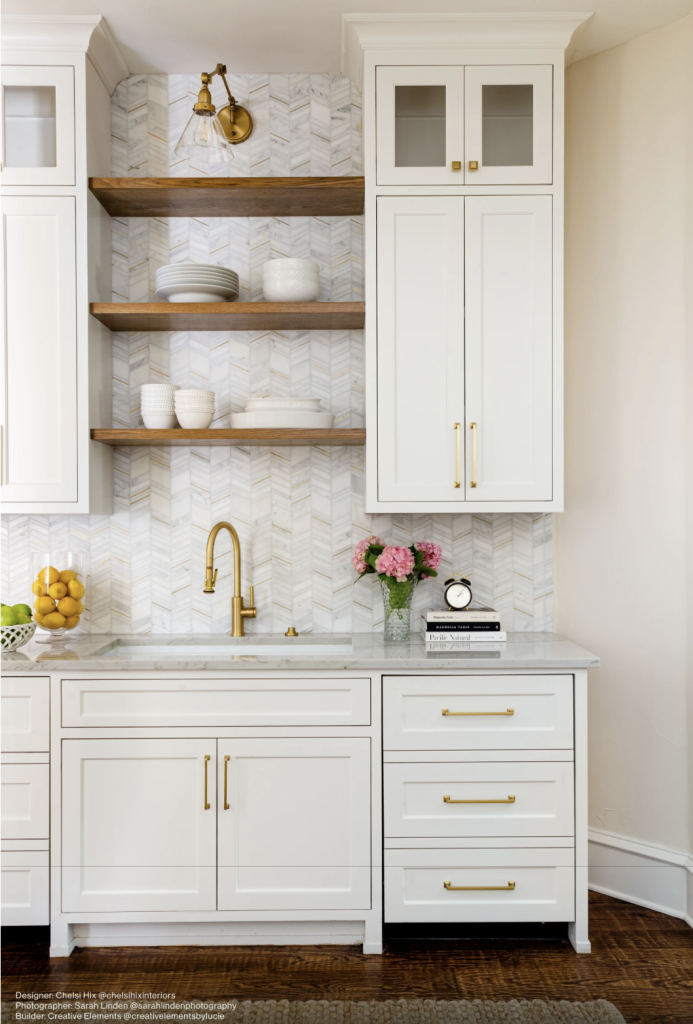
Chevron often gets confused with herringbone—but it’s more structured.
Difference:
- Herringbone = staggered zig-zag
- Chevron = continuous V shape
Why people choose it:
- Symmetrical, geometric look
- Strong visual impact
Where it works best:
- Feature walls
- Kitchens where the backsplash is meant to stand out
This is not a subtle pattern—it becomes the focal point fast.
5. Basket Weave (Classic With Texture)
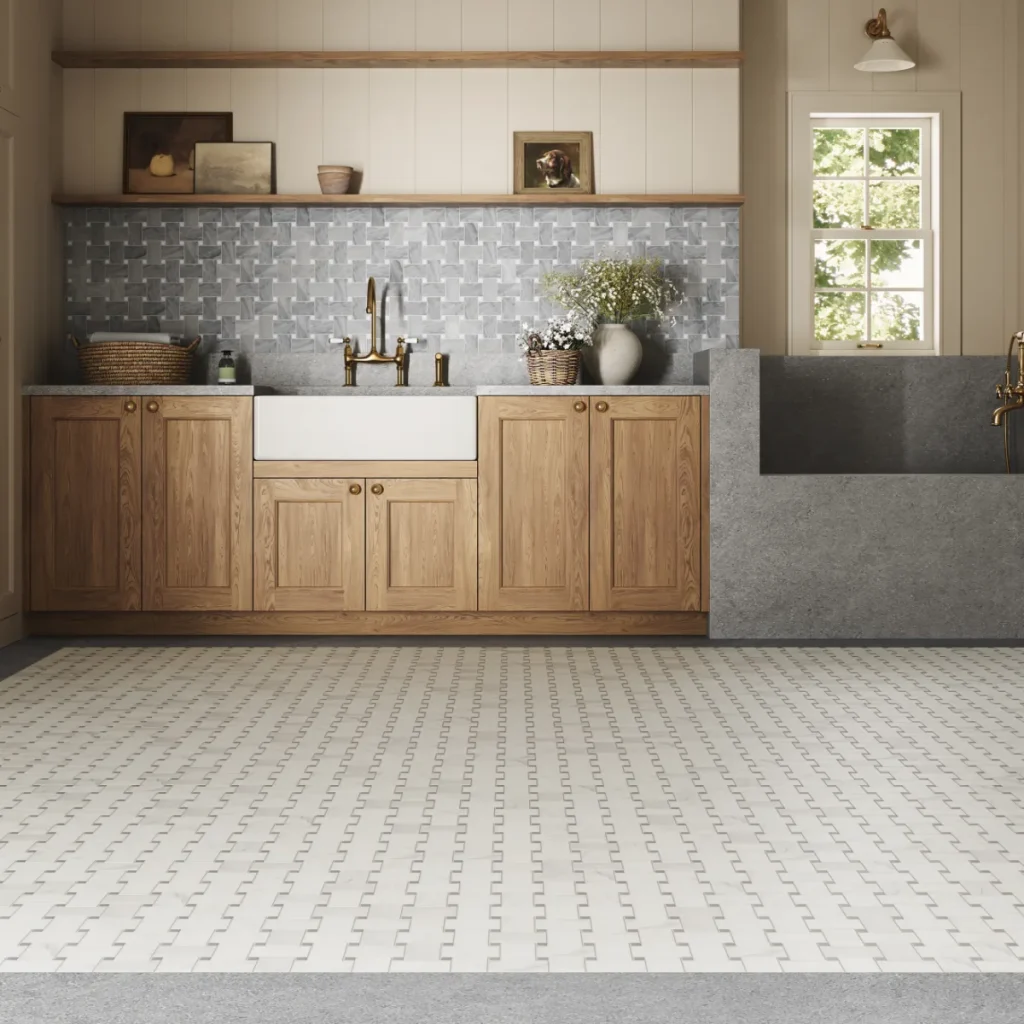
Basket weave has been around for a long time—but it’s making a comeback.
Why it works:
- Adds texture without being overwhelming
- Feels traditional but still interesting
Best for:
- Transitional kitchens
- Spaces that need detail without bold patterns
This is a good middle ground between simple and decorative.
6. Mosaic Tile (The Catch-All Category)
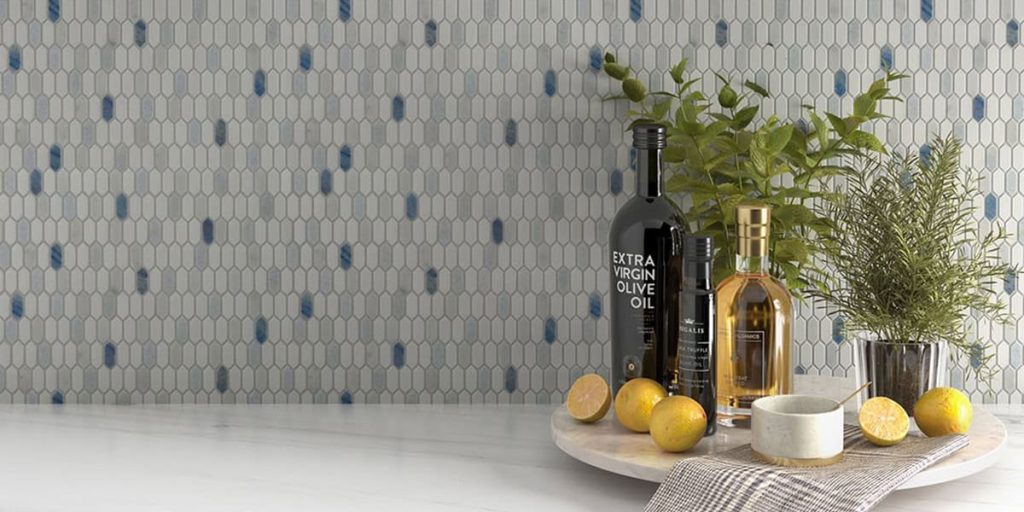

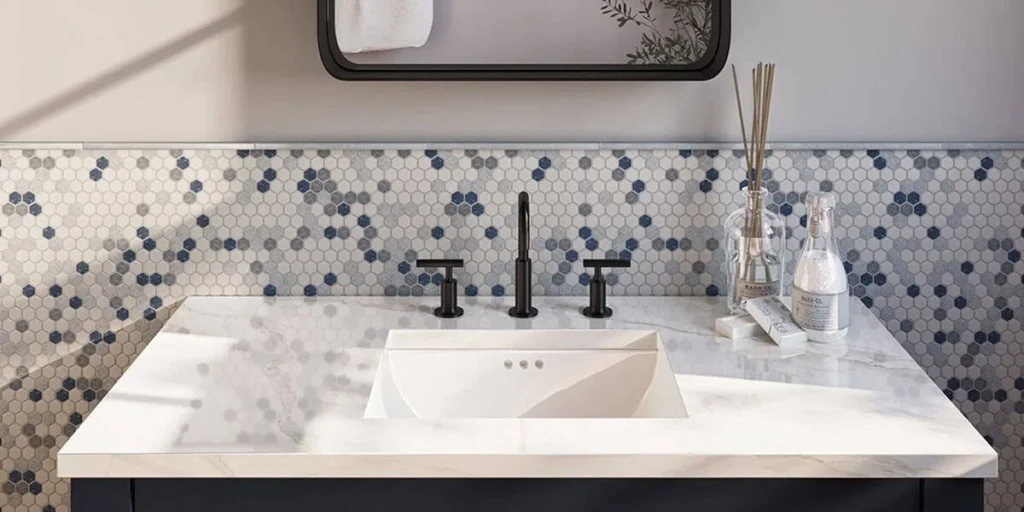

Mosaic covers a lot:
- Penny tile
- Fish scale
- Glass blends
- Natural stone
Why it’s popular:
- Endless variety
- Great for adding personality
- Works well in smaller areas
Where it goes wrong:
- Too much color
- Competing with countertops or cabinets
Rule of thumb:
If you go mosaic, simplify everything else.
Bonus Patterns You Should Know
These might not be the most Googled, but they’re worth considering.
Large Format Tile
- Fewer grout lines
- Clean, modern look
- Great for low-maintenance designs
Diagonal Layout
- Standard tile, rotated
- Adds subtle visual interest
- Makes small spaces feel larger
Arabesque
- Curved, decorative shape
- More traditional or ornate
- Works best when the rest of the kitchen is simple
How to Actually Choose the Right Backsplash Tile Patterns
Here’s the part most people skip.
Don’t just pick a pattern because it looks good on Pinterest.
Think about:
- How busy your countertops are
- Cabinet style and color
- How much visual movement you want
Simple rule:
- Busy kitchen ? simple pattern
- Simple kitchen ? you can go more decorative
The goal is balance—not stacking design elements on top of each other.
Final Thought
These backsplash tile patterns are popular for a reason—but the difference between a good kitchen and a great one is how you use them.
Layout, grout, and overall coordination matter just as much as the pattern itself.