
In this video, we see a common argument in tile installation that sounds logical at first:
The wall tile should sit on top of the shower floor tile so water runs down the wall, lands on the floor tile, and flows toward the drain instead of getting into the joint.
The problem is that it gives the finished tile a job it was never supposed to have.
Whether the wall tile sits on top of the floor tile or the floor tile runs underneath the wall, there will still be a joint where those two surfaces meet.
And water can still get there.
That’s why the real protection needs to be behind the tile.
Tile and Grout Aren’t Waterproofing
Say it with me! Tile and grout ARE NOT waterproof!
We’ve covered this (check out this article)
This is probably the most important thing for homeowners to understand about a shower.
Tile looks waterproof.
Grout looks like it seals everything together.
But neither one should be relied on as the waterproofing system.
Water can make its way through grout joints and around changes of plane. That is normal and should be expected when the shower is designed.
The waterproofing underneath the finished tile is what keeps that moisture from reaching the framing and structure of the house.
So if we’re depending on the direction of the tile overlap to keep water out of the wall, we’re already asking the wrong part of the shower to do too much.
There Will Be a Joint Either Way
Imagine the wall tile comes down and sits on top of the floor tile.
There is still a joint where the bottom of the wall tile meets the floor.
Now reverse it. Install the wall tile first and bring the shower floor tile up to it.
There is still a joint.
You haven’t eliminated the potential path for moisture. You’ve just changed where that joint is positioned.
That’s the flaw Rob points out in the video.
Water doesn’t look at the tile and say, “Well, this piece overlaps the other one, so I guess I’ll head straight to the drain.”
If moisture reaches that corner, the shower assembly underneath needs to be prepared for it.
What About Caulk?
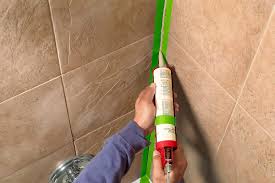
The original video also talks about caulking the wall-to-floor joint.
A flexible sealant at a change of plane serves an important purpose because the floor and walls can move slightly in relation to one another.
But caulk should not be treated as the thing protecting your house from a shower leak.
Caulk ages. It can separate, crack, discolor, or eventually need replacement.
That’s maintenance—not a waterproofing strategy.
Even when the visible joint is sealed beautifully, we still want a complete waterproof system behind it.
If the shower only stays dry because one bead of caulk remains perfect forever, that shower has a pretty stressful retirement plan.
This Is Why We Prefer Surface Waterproofing
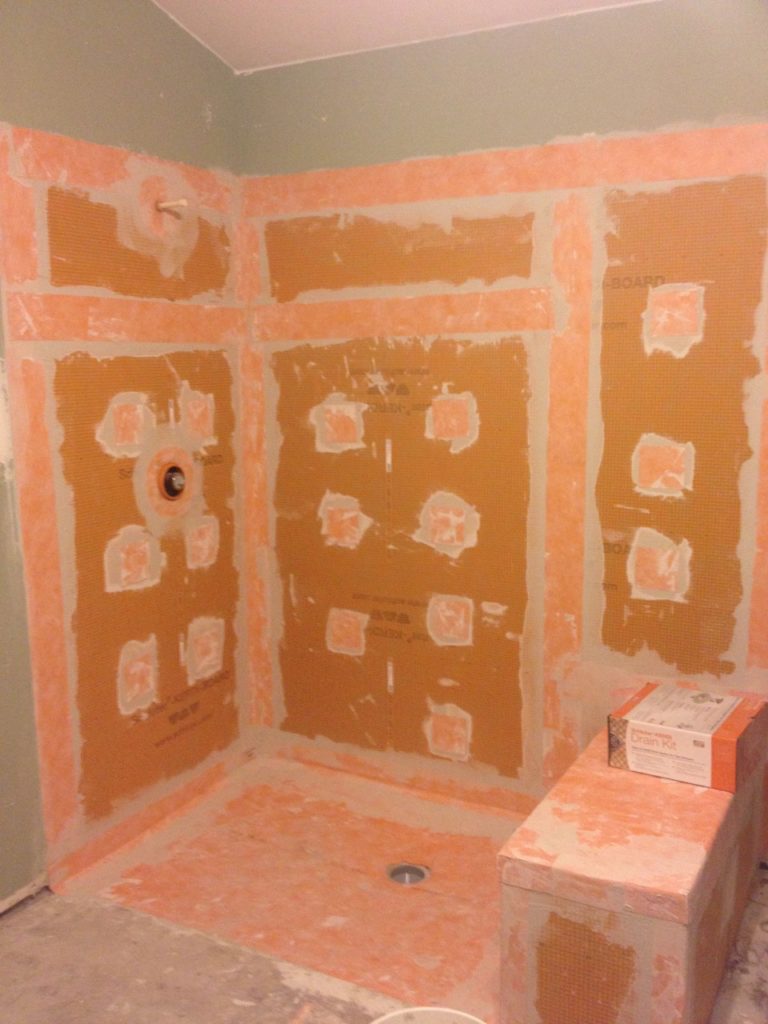
At MannTile, we prefer Schluter waterproofing systems for our shower installations.
With a bonded waterproofing system, the waterproof layer is directly behind the tile. The shower floor, walls, corners, seams, niches, and drain can all be tied together into one continuous assembly.
Water that gets through the finished tile or grout reaches that waterproof layer instead of soaking into a traditional mortar bed and relying on another system farther below to manage it.
That’s the part of the shower we want doing the heavy lifting.
The tile is the finish.
The waterproofing is the protection.
So Should the Floor or Walls Be Tiled First?

That becomes more of an installation and layout decision than a waterproofing decision.
As we’ve discussed before, sometimes we install the shower floor first. Sometimes the walls make more sense first.
A detailed mosaic floor may be easier to establish before bringing larger wall tile down to meet it. On another project, an intricate wall pattern may be the priority, with the simpler floor tile cut afterward.
We look at the actual materials and decide which sequence will create the cleanest finished result.
But we don’t choose that order because we expect one tile to act like roof shingles over another and make the shower waterproof.
That work should already have been done underneath.
Build the Shower to Expect Water
A good shower is designed around a simple reality:
Water will get places you wish it wouldn’t.
That’s why we slope the floor properly. It’s why we waterproof corners and penetrations. It’s why we connect the waterproofing correctly to the drain.
And it’s why we don’t rely on grout, caulk, or the direction of a tile overlap as the only thing standing between shower water and the wall cavity.
Whether the floor tile goes first or the wall tile goes first, the goal is the same: a clean-looking installation sitting on top of a properly waterproofed shower.
For homeowners in Englewood, Venice, North Port, and throughout Southwest Florida, MannTile focuses on building the waterproofing correctly before worrying about which finished tile overlaps the other. Because the best-looking joint in the world isn’t much help if the system behind it can’t handle water.