
We are doing a series where we react to popular tile tik-toks, check it out here!
At first glance, this tile installer looks like he knows exactly what he’s doing.
The thinset is going down smoothly. The motion is quick, confident—even satisfying to watch.
But we found 3 things…
let’s break it down.
1. Spreading Thinset the right way: Directional Troweling.
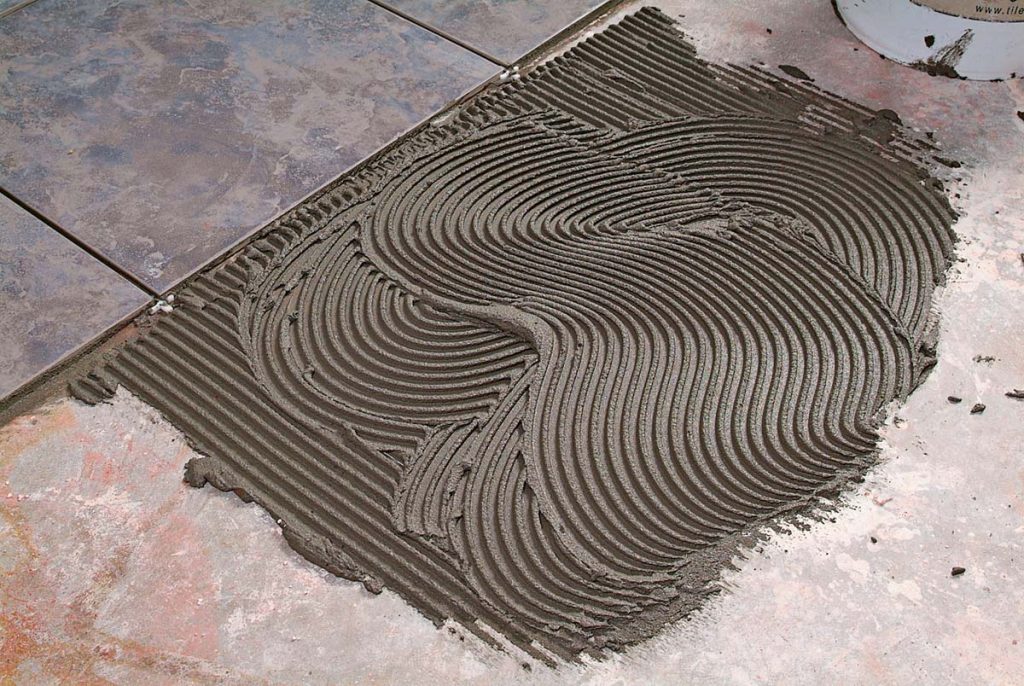
In the clip, the installer is spreading thinset using a swirling, circular motion.
It might look efficient, but this method creates random, inconsistent ridges in the mortar bed.
And that’s where the issue starts…
When you set tile into thinset, the goal is to collapse the ridges and achieve full, even coverage.
But with a swirl pattern the ridges go in multiple directions, air will get trapped between those ridges and that will make it so there is no clear path for the air to escape.
That will create voids under the tile, reduce bond strength, create hollow spots and you’ll end up with a higher risk of cracking or failure over time.
It may look fine on the surface—but underneath, the installation is compromised.
Check out this fun video that expands on the correct way to trowel.
Instead of swirling, industry best practice is to use directional troweling—combing the mortar in straight, parallel lines.
This creates consistent channels so that when the tile is pressed in: The ridges collapse uniformly, air will now be pushed out efficiently and won’t get trapped and you’ll get maximum mortar coverage and bond strength.
What Do the Standards Say?


The National Tile Contractors Association also actively promotes directional troweling as a best practice specifically because it improves coverage and reduces voids.
Don’t believe me! Read it from the TCNA themselves!
2. Thinset consistency
As we mentioned on our other blogpost where we reacted to a different part of the video, it looks like the thinset was too wet!
When mixing thinset, you’ll want the consistency to be like creamy peanut butter or thick yogurt. Other things to look for: It should hold a ridge when you trowel it but still spread smoothly without dragging.
Quick tests:
- If it slumps off the trowel ? too wet
- If it crumbles or drags ? too dry
3. Don’t step on your tiles!
We also wrote about this, check it out here!
When tile is first set, the thinset underneath hasn’t cured yet.
It’s still soft, movable and in the process of bonding.
Have you ever walked on wet tiles? they’re sliding all around!
So even though the tile looks solid on top, it’s not locked in place yet. It’s important to keep that in mind.
The Bottom Line
When you’re watching tik Tok, instagram or YouTube videos, don’t take everything you see at face value…
You might find useful and educational content, but you can’t stay there, you have to go directly to the source.
We recommend checking the TCNA, NTCA manuals, and finding resources like our blog that aim at upholding said standards.
Check out Why Tile, where you also will find great value education on all things tile.
So next time you see a technique that looks impressive, ask the real question:
Is it actually following best practices and industry standards?