
Watch our lates episode of Rob reacting to tile TikToks here!
Shower Niches will make a shower look prettier while also optimizing storage.
And even though it looks simple and you may think “oh, it’s just a box on the wall!”… they can take an awful long time to install.
If you’ve ever wondered why a “small niche” can add a full day (or more in some cases) to a shower build, here’s a breakdown of how it’s installed and why it takes as long as it does.
What Is a Shower Niche?
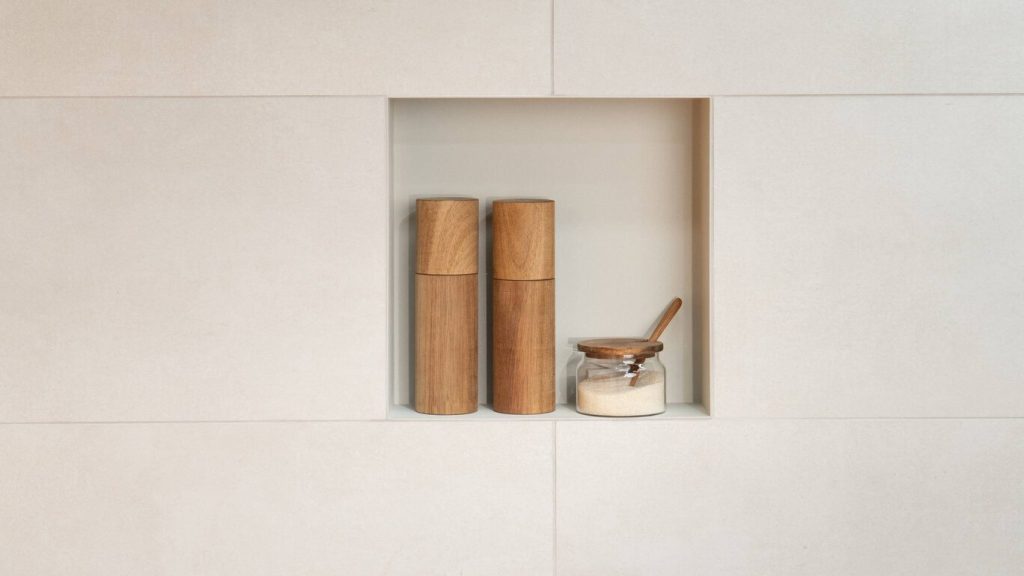
A shower niche is a recessed shelf built into the shower wall. It replaces bulky caddies or corner shelves and is typically tiled to match the surrounding walls.
While it seems like a minor feature, it actually interrupts the entire wall system—structurally and waterproofing-wise—which is why proper installation matters so much.
So, a niche is not something you can simply decide to add later on, as it affects pretty much everything else in the install.
1. Planning the location and size
The niche has to be carefully planned before any cutting takes place.
The installer must consider things such as:
Who will be using it?
Is it easy to access?
Where are the studs located?
Are there any plumbing and/or electrical lines running behind that wall?
How will this affect my layout?
A well-placed niche is often designed around the tile pattern, not the other way around. This step alone can determine whether the finished result looks intentional or awkward.
2. Framing the opening.
Once the location is chosen, the wall is opened up and modified.
This involves cutting out a section of drywall or backer board and sometimes reframing to create a square or rectangular cavity.
3. Waterproofing, waterproofing, waterproofing!
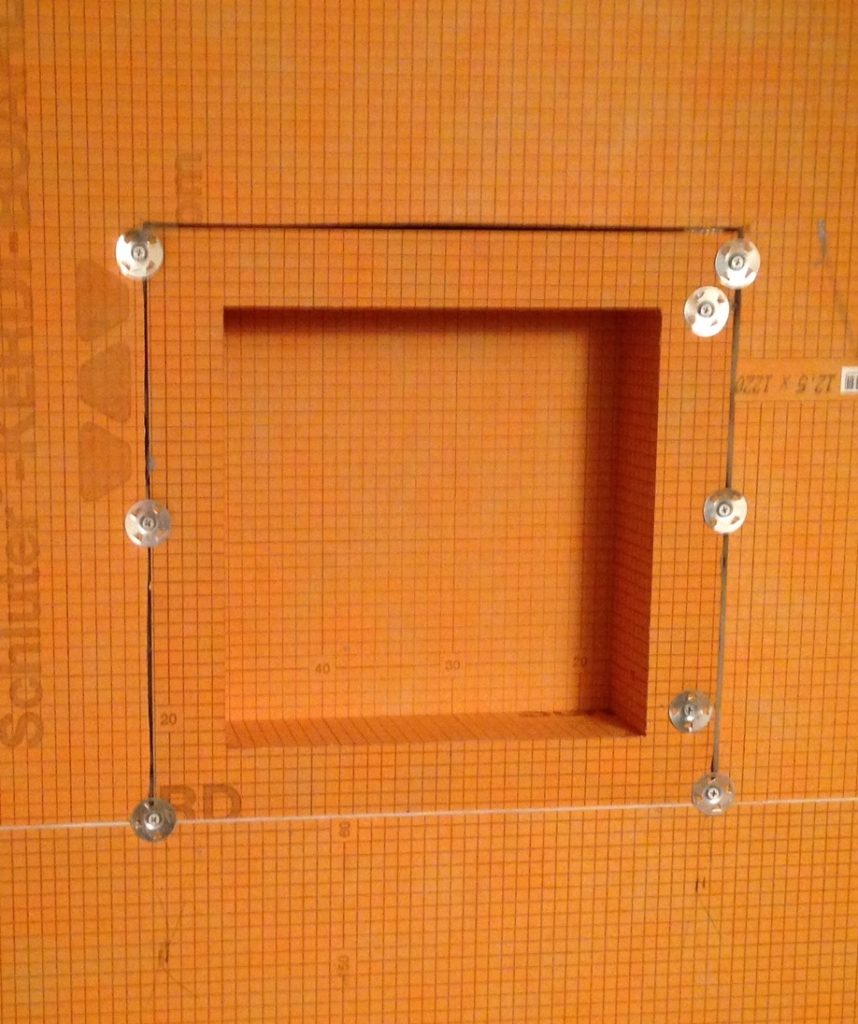
This is perhaps the most critical and time consuming part of the whole thing.
A shower niche sits directly in the wet zone, and you’re carving a whole into the wall, making the whole system more susceptible to water damage.
Therefore, you must put special attention to waterproofing.
We proudly use and recommend schluter systems for all things waterproofing.
Every joint, screw penetration, and transition must be sealed. There is no room for shortcuts here—any weak point can eventually become a leak.
4. Integrating the niche into the shower waterproofing.

The niche cannot be treated as a separate box. It must tie seamlessly into the waterproofing of the entire shower wall.
That means: Overlapping membranes correctly, Sealing transitions between flat wall and recessed area, Allowing proper curing time for waterproofing layers.
This integration step is where experience really matters.
And then you’ll proceed to tile as usual.
All these things will add time to your install, so you have to plan accordingly.
A niche will interrupt the wall system, requiring you to modify your framing and rebuild your structure around this new opening.
Waterproofing becomes significantly more challenging as we are adding multiple inside corners, more seams and additional transition points.
And the tile layout becomes custom work that requires precision. You may have to do a ton more cuts.
Not to mention the time we have to let it dry.
Is it even worth it?
As Jenasie says in her video: “abso-frickin-lutely!”
When done correctly, it becomes one of the cleanest and most functional details in a shower. When rushed, it becomes one of the most common failure points.
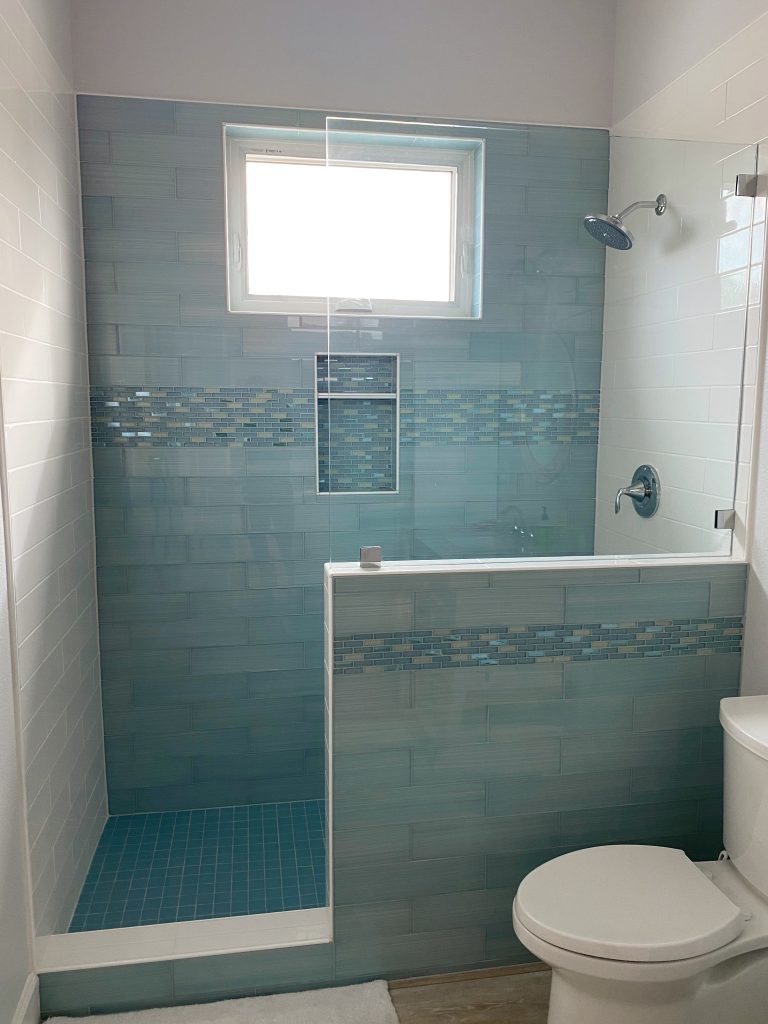
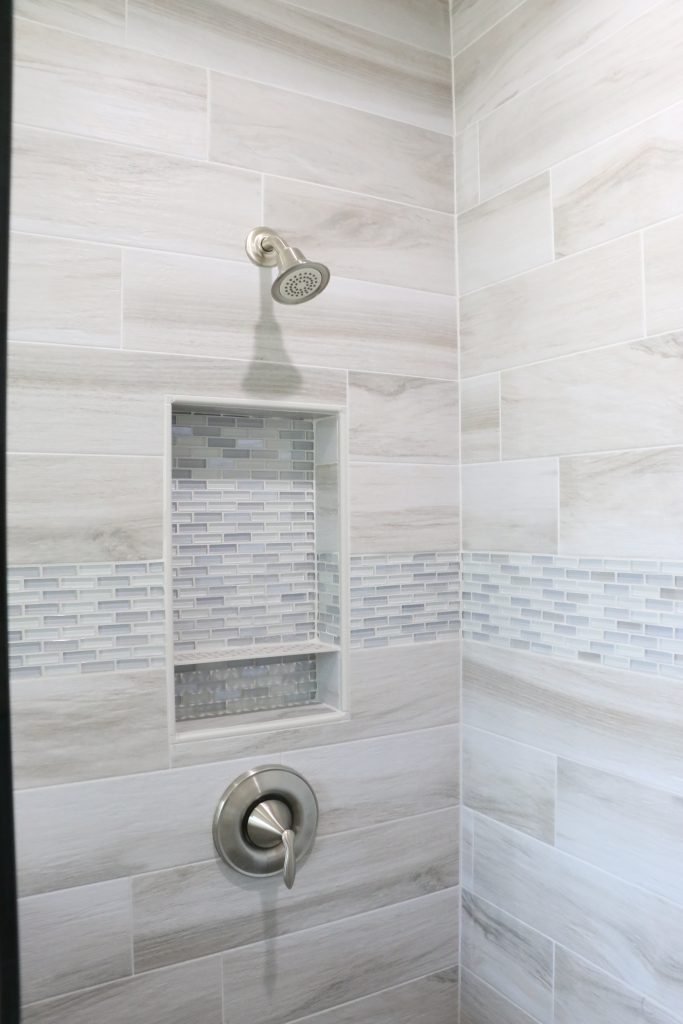
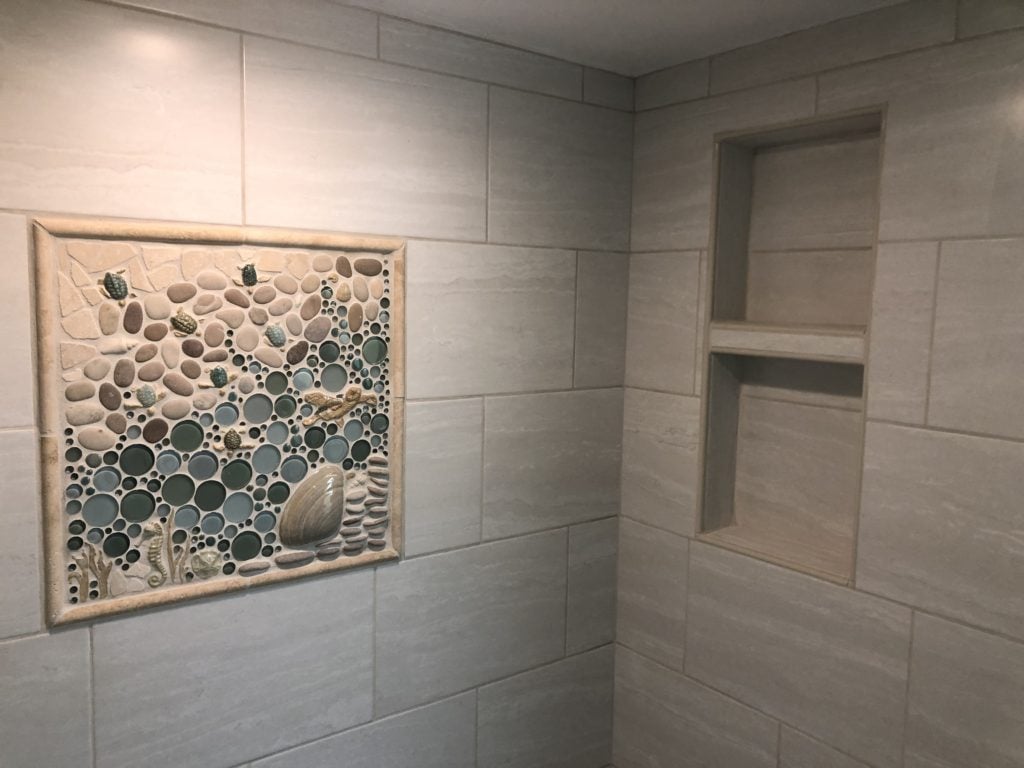
Here are a few niches we’ve done over the years :


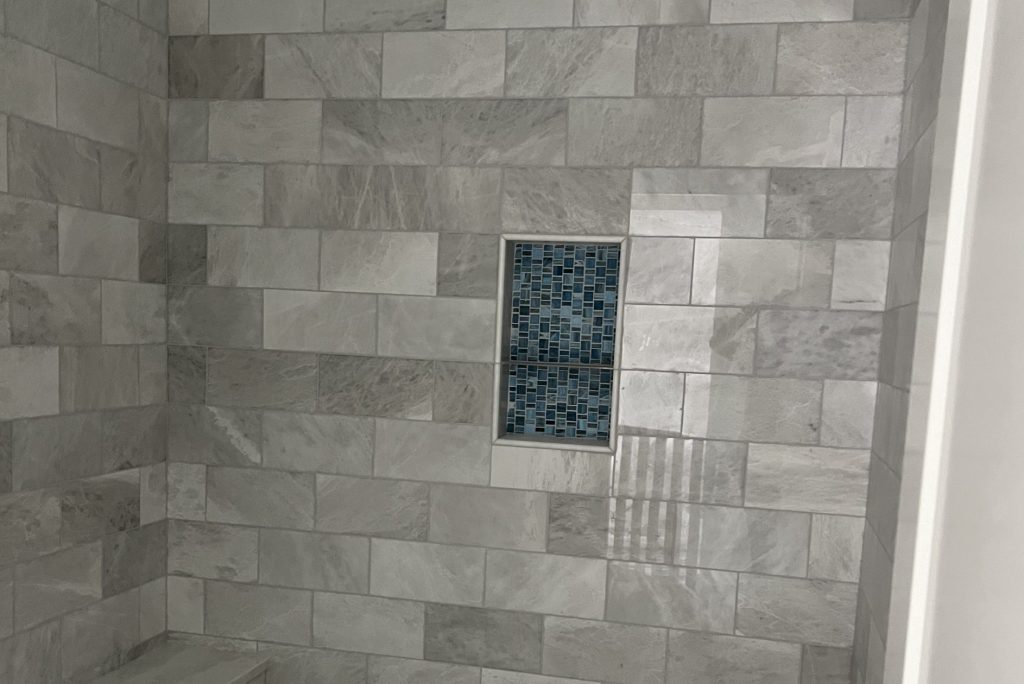
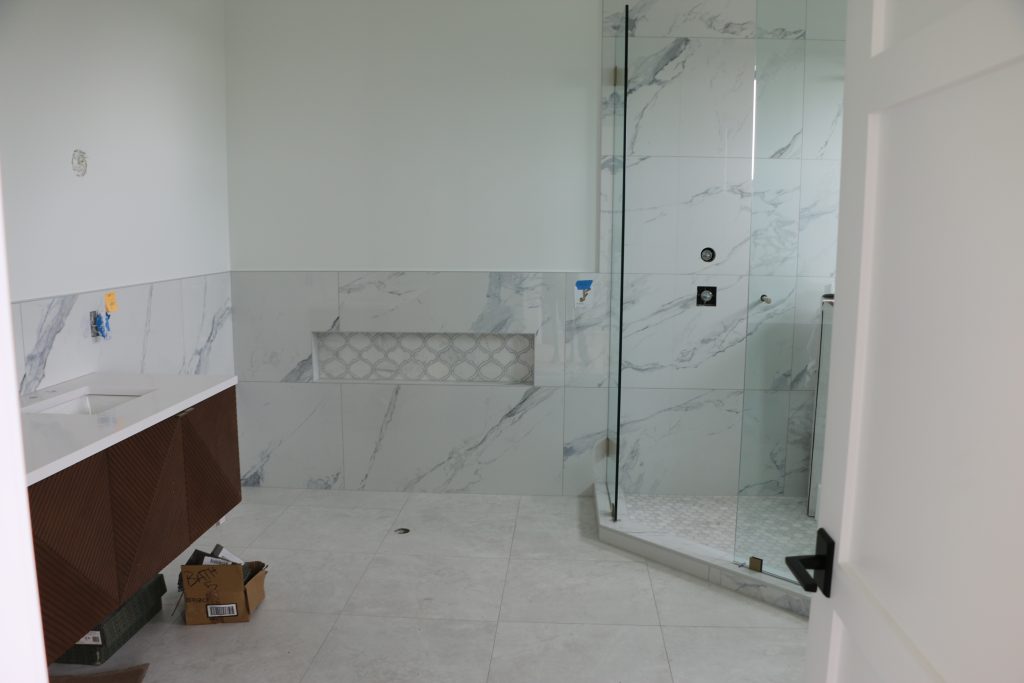



If you’re ready for a shower remodel and are thinking about doing a niche don’t hesitate to reach out to us, we’d be happy to help.
Thanks for reading!
If you enjoyed this post, here’s another one we think you might enjoy.