
In this video, we react to a Tik Tok that shows pea gravel around the shower drain as a water-in/water out system.
We’ve written extensively about waterproofing and shower systems. Today, we’d like to touch specifically on water-in/water-out.
In traditional shower builds, you’ll often hear about weep holes and “water-in/water-out” systems. The idea is that water can pass through the tile and mortar bed, reach the shower pan liner, and then escape through small weep holes in the drain.
In theory, that sounds like a system.
In practice, we’re not big fans.
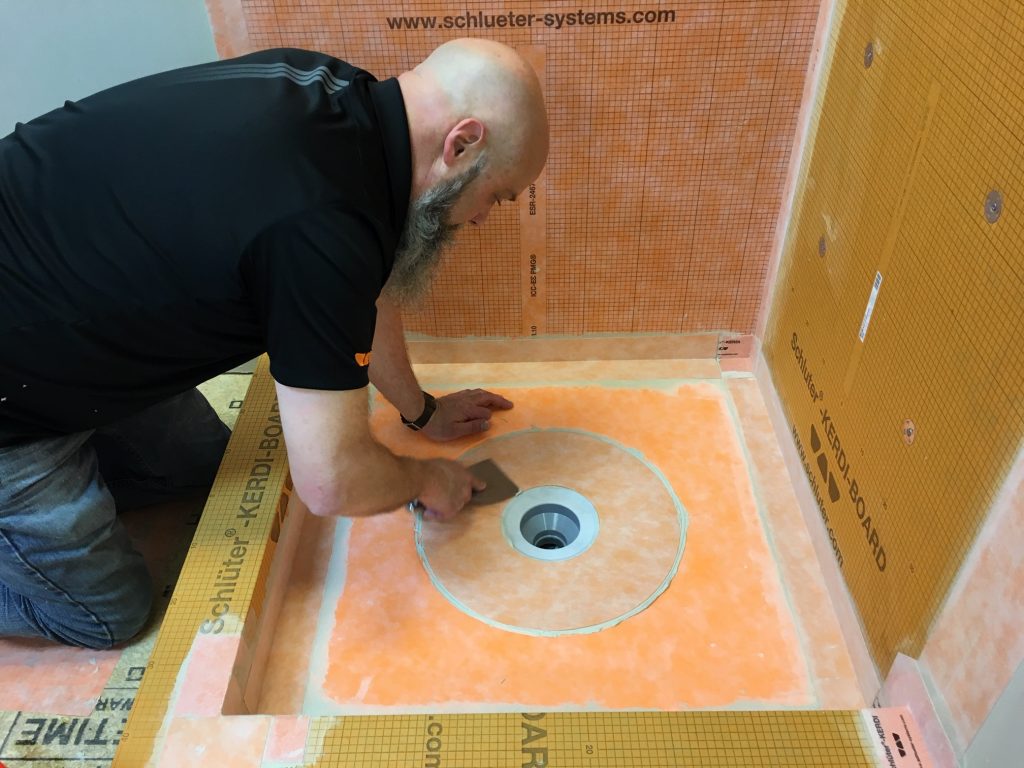
We prefer Schluter waterproofing systems because we believe a shower should be waterproofed as close to the surface as possible — not designed around letting water soak into the mortar bed and hopefully find its way out later.
What Is a Traditional Water-In/Water-Out Shower System?
A traditional shower system usually uses a preslope, a pan liner, a mortar bed, and a clamping-style drain with weep holes.
The tile and grout are installed on top, but tile and grout themselves are not waterproof. So when water gets through the surface, the system depends on that moisture moving through the mortar bed, reaching the liner, and draining out through the weep holes.
That is where the term “water-in/water-out” comes from.
Water gets in, and the system is supposed to let water get out.
The problem is that there are a lot of ways for that process to go wrong.
Why We Don’t Love Relying on Weep Holes

Weep holes are small openings in the drain that are supposed to let water escape from the mortar bed.
But those little holes can get blocked by mortar, thinset, debris, or improper installation. Even when installers try to protect them, the whole system still depends on water traveling underneath the tile and finding its way to the drain.
To us, that is not the ideal approach.
If a shower system needs water to enter the mortar bed and then depends on tiny drain openings staying clear forever, that is a lot of trust being placed in a very vulnerable detail.
And when that detail fails, water can sit in the mortar bed longer than it should. Over time, that can lead to moisture problems, odors, staining, and a shower floor that never really dries out properly.
Why We Prefer Schluter Waterproofing Systems
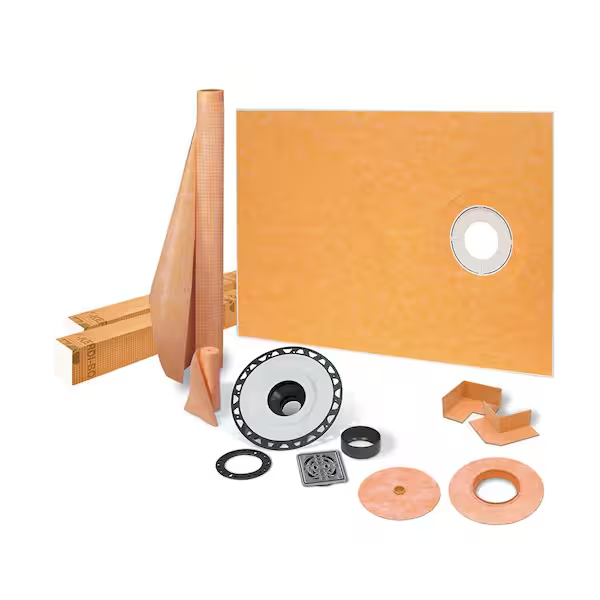
With Schluter systems, the waterproofing is brought much closer to the surface. (Check out their products here!)
Instead of letting water soak down into a traditional mortar bed and then trying to manage it underneath, Schluter uses bonded waterproofing membranes and integrated drains designed to keep the shower assembly drier from the start.
That makes more sense to us.
The goal should not be: “Let water in, then hope it gets out.”
The goal should be: “Keep the water where it belongs and direct it to the drain.”
That is why we prefer surface-applied waterproofing systems for showers. They give us a cleaner, more modern approach to waterproofing and reduce the reliance on old-school drain details like weep holes.
Traditional Systems Can Work — But We Don’t Prefer Them
To be fair, traditional shower systems have been used for a long time, and when installed correctly, they can function… until they don’t anymore.
But just because something has been done for decades does not mean it is our preferred method today.
We have seen enough showers, repairs, and moisture-related issues to know that the hidden parts of the system matter. When there is a better way to control water, we want to use it.
For us, Schluter waterproofing systems offer a more dependable approach because they are designed around surface waterproofing, proper drainage, and reducing the amount of moisture that gets trapped in the assembly.
A Shower Should Be Built to Last
A finished shower is not just tile and grout.
It is a full system.
The prep, waterproofing, drain connection, slope, layout, and installation details all have to work together. Beautiful tile is great, but it does not mean much if the waterproofing system underneath is weak.
That is why we care so much about what happens before the tile goes up.
At Mann Tile, we want showers that look good on day one and continue performing well for years. For us, that means moving away from traditional water-in/water-out thinking and choosing waterproofing systems that keep moisture under better control from the beginning.
In Conclusion
Traditional systems depend on water getting into the mortar bed and then escaping through small drain openings.
We would rather avoid that problem in the first place.
That is why Mann Tile prefers Schluter waterproofing systems. We believe they offer a cleaner, smarter way to build showers and give homeowners more confidence in what is happening behind the tile.
Because the best shower installations are not just the ones that look good.
They are the ones built right underneath.
Read more about waterproofing here!
Stay up to date on all things tile!
please consider subscribing to catch our latest articles before anyone else!